Technology
-

- Coworking Resources
- Technology
- Uncategorized
Where are your workspace bookings coming from?
Jane Robathan on September 1, 2026 -

- Coworking Resources
- Technology
Questions Your Knowledge Base Can’t Answer
Jane Robathan on August 13, 2026 -

- Coworking Resources
- Technology
SEO for coworking spaces: Easiest guide ever
Jane Robathan on August 11, 2026 -
- Coworking
- Technology
How a Workspace Booking App Improves the Member Experience
Emily Nguyen on August 10, 2026 -
- Coworking
- Technology
How to Choose the Right Desk Booking App for Your Coworking Space
Emily Nguyen on July 23, 2026 -

- Coworking Resources
- Technology
How Is AI Changing Coworking Management Software?
Coworking operators are harnessing AI-driven smart building technology, advanced analytics and OpenAI models to optimise occupancy levels...
Jane Robathan on July 20, 2026 -

- Coworking Resources
- Technology
What Makes Coworking Software Agent-Ready?
Jane Robathan on July 14, 2026 -
- Coworking
- Technology
What Is White Label Coworking Software? A Guide for Workspace Operators
Emily Nguyen on July 13, 2026 -
- Coworking
- Technology
How Operators Can Use AI Without Losing Control of Member Data
Emily Nguyen on July 1, 2026 -

- Coworking News
- Technology
Everyone Wants to Use AI. So, Where Do Coworking Operators Start?
Jane Robathan on June 23, 2026

TL;DR
Nexudus now records the original source of every booking, helping you compare booking journeys across Passport, the Members Portal, NexBoard, the Admin Panel and other connected tools.
A booking tells you someone wants to use a space. But where did they actually make that booking?
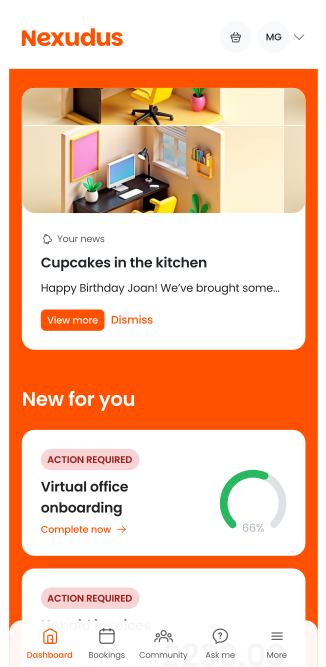
Members have more than one way to book across your workspace. They might reserve a meeting room through your Members Portal, book on the go with Passport, or make a booking directly from NexBoard. Your team might also create bookings for them through the Admin Panel.
Now, Nexudus gives you visibility into where those bookings started. Nexudus automatically records the original source of new bookings. Admins can see the source on individual booking details and filter booking lists by source, giving you more context behind your booking activity and how people choose to interact with your workspace.
See the journey behind every booking
Not every member books in the same way.
Someone might use Passport when they need a desk while they’re on the move.
Another member might head to your Members Portal to book a meeting room in advance. Someone already in the building could use NexBoard to book an available room.
Previously, those bookings could all end up looking much the same in your booking data.
With booking source tracking, Nexudus records where each new booking was originally made, so you can see the journey behind it.
And that information isn’t just there to view on individual bookings — you can use it to dig into booking activity across your workspace.
Booking sources include the Members Portal, Passport, NexBoard and Admin Panel, as well as API integrations, MCP, CLI, SDK and Automation Tiles.

Filter bookings by source
Admins can filter booking lists by Booking source, making it easy to focus on bookings created through a particular route. You can also see the original source in the Booking source section of an individual booking’s details.
You could filter for NexBoard bookings after introducing room displays across your workspace. Or look specifically at Passport bookings to better understand how much booking activity originates from the app. You can also distinguish bookings created through member-facing experiences from those created by your team in the Admin Panel.
Once you can separate those booking journeys, you can start looking at what they tell you about the way members choose to book.
How do your members prefer to book?
Giving members different ways to book is one thing, but really knowing which ones they use is another.
Booking source data gives you an additional signal when you’re looking at how people interact with your workspace.
If bookings from Passport are increasing, that could indicate more members are choosing to book on the go. If you’re rolling out NexBoard across more rooms, you can see bookings originating there. And if your Members Portal is a key part of your member experience, you can identify the bookings starting from it.
It isn’t a new analytics dashboard or a prediction of member behaviour. Instead, it gives you another useful piece of data to filter and explore — helping you build a clearer picture of the booking journeys being used across your workspace.
And because Nexudus records where a booking originally came from, that picture isn’t lost when someone makes changes later.
Keep the original source, even when a booking changes
The source tells you where a booking started, rather than simply where it was last updated.
Imagine a member books a meeting room through the Members Portal. Later, someone on your team opens that booking in the Admin Panel to make a change.
The booking source remains Members Portal.
The original source is also retained if a booking is cancelled and subsequently restored, so changes to the booking don’t remove that context.
That means you can distinguish where bookings genuinely originated from the administrative work that might happen afterwards.
Put all of that together, and each booking gives you a little more context than it did before.

Get more context from your booking data
For workspace operators, understanding how spaces are being used is an important part of running a great member experience. Now there’s another piece of that picture.
Alongside seeing what people are booking and when, you can see where the booking came from.
Whether you want to understand the uptake of NexBoard, explore bookings coming through Passport, separate member bookings from those created by your team, or simply get more context behind your booking activity, booking source tracking makes that information easier to find.
See where your bookings are coming from in the Nexudus Admin Panel.