


- Coworking Resources
- Technology
What Makes Coworking Software Agent-Ready?

TL;DR
AI is changing more than individual features. It’s changing how people use coworking software. Agent-ready platforms are designed for that shift, combining live business data, AI agents, natural language interfaces and built-in governance so operators can adopt AI in the way that suits them best.
AI is another way people use software
Every software company now says it has AI. The more interesting question is whether the platform was actually designed for it.
Not long ago, using coworking software meant logging into a dashboard, clicking through menus and manually completing tasks. Need to check tomorrow’s bookings? Open the calendar. Need to see which memberships expire next month? Run a report. Need to find an unpaid invoice? Search for it.
Today, operators are asking software questions instead of clicking through menus, members are booking rooms through conversations instead of forms, and behind the scenes AI agents are analysing operational data, spotting patterns and recommending actions before someone notices there’s a problem. What’s changed isn’t the job to be done, it’s the interface.
AI features vs AI-ready software
Adding an AI chatbot to existing software is relatively straightforward. Building software that AI can safely work with is something else entirely.
As AI becomes another user of business systems, your coworking platform needs to understand how that AI should interact with bookings, memberships, invoices, resources and customer data.
That means designing for architecture, workflows and governance over features.
Giving AI context
“Garbage in, garbage out.” We know that AI is only as useful as the information it has.
A generic chatbot knows how to take you details and route you to the right department, yet so little about your coworking space. To truly shine, an AI assistant should know
- which meeting rooms are available
- which memberships are public
- who has an outstanding invoice
- which office becomes available next month
- whether a booking has already been confirmed
That’s why modern coworking software increasingly connects AI directly to the operational data operators already manage every day.
When AI understands bookings, memberships, pricing, contracts, availability and FAQs content, it stops feeling like a chatbot and starts feeling like another member of the team.

AI with more than one interface
People don’t all use software in the same way and AI is giving them more choice about how they interact with it.
We’re all used to asking ChatGPT, Claude and Gemini questions in natural language, and getting answers drawn from the vast amount of information on the web.
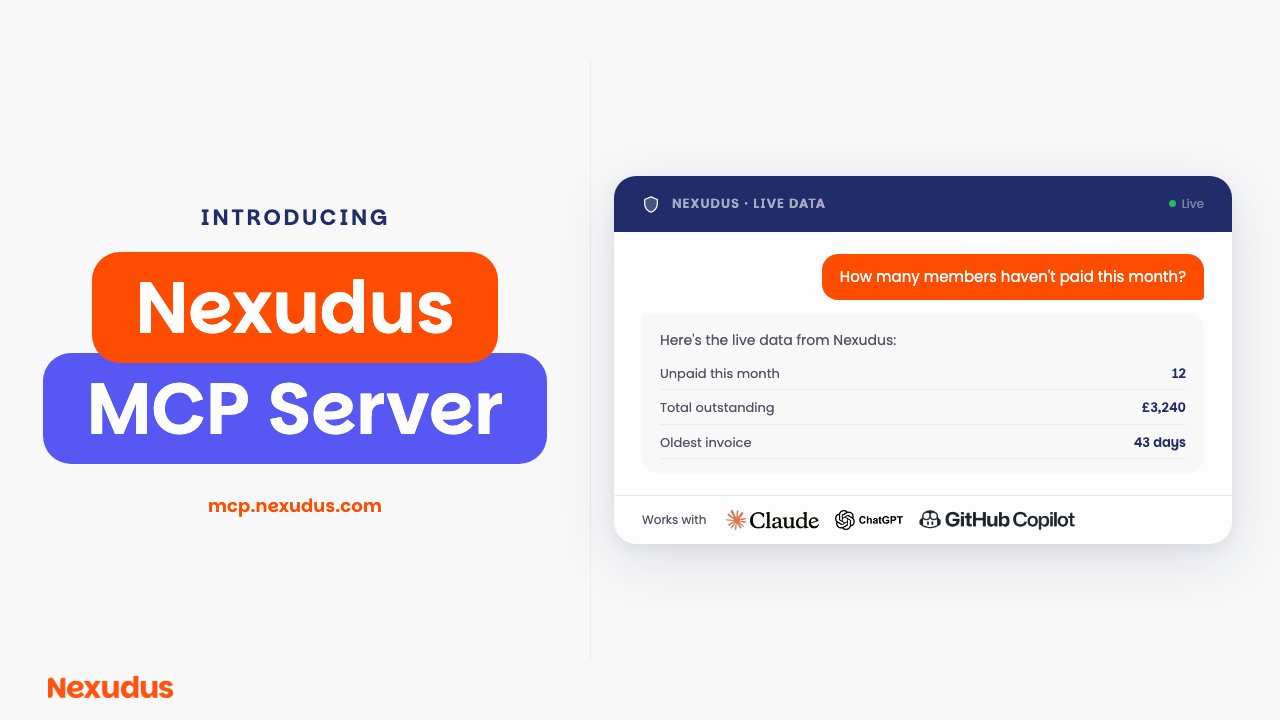
Now, organisations are beginning to connect AI assistants directly to their business systems. Instead of relying on public information, AI can answer questions, retrieve data and complete tasks using live information from software they use and data that’s specific to them.
So, what if your coworking software had multiple ways to interact with it? Your team could ask questions in natural language instead of navigating reports.
Members and prospects might use an AI front desk across chat, email, WhatsApp or voice.
Technical teams could connect their own AI tools through secure interfaces designed for automation.
An AI-ready platform supports all of these approaches, allowing people and AI to work with the same system in the way that suits them best, all powered by data that’s unique to the business.
Let’s talk about AI guardrails
Giving AI access to business systems raises a big question. How much access should it have?
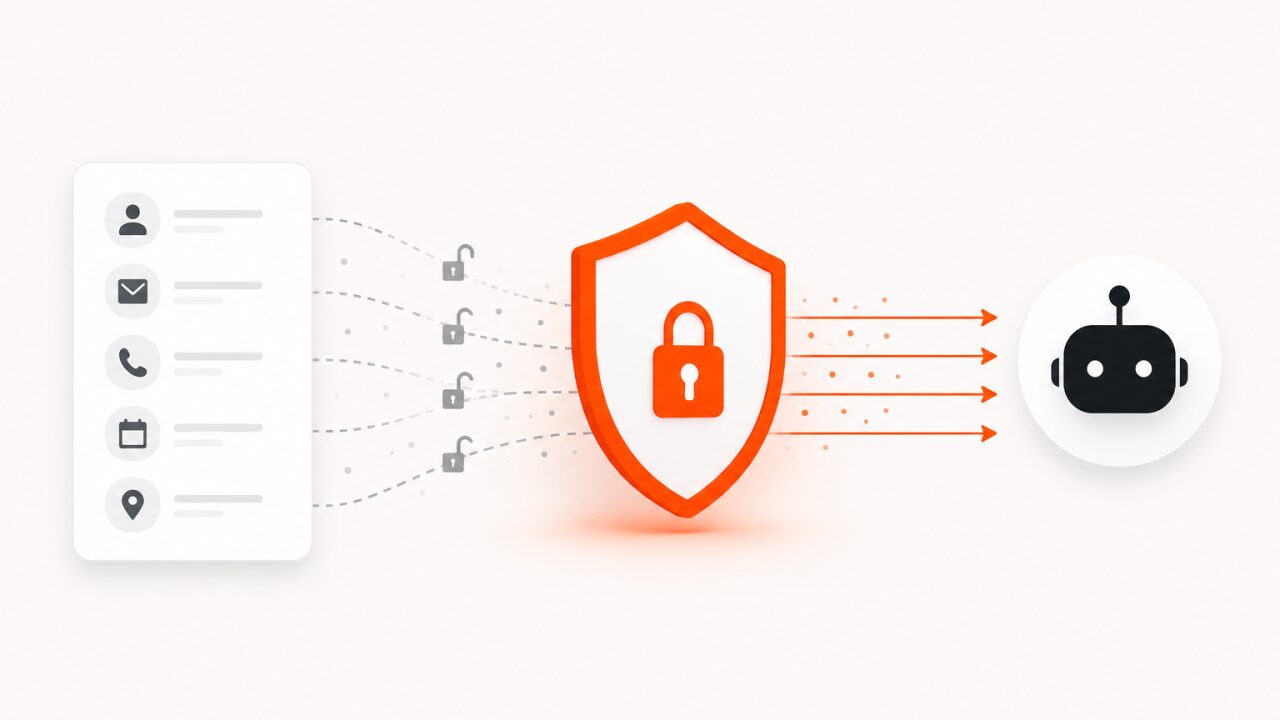
AI doesn’t change the importance of protecting member data. Many of the tasks operators want AI to perform don’t require personal information to be exposed in the first place.
AI can identify overdue invoices, analyse occupancy trends or highlight churn risks without automatically accessing names, email addresses or phone numbers.
That’s why AI-ready software doesn’t simply connect AI to data, it goes further by governing how that data is accessed.
Permissions, visibility rules and structural safeguards become just as important as the AI itself. Good governance isn’t something operators should have to remember every time they use AI, we think it should be built into your platform.
AI is becoming a team
The first wave of AI focused on one assistant that tried to do everything, but the next wave looks more like a team.
Rather than relying on a single general-purpose assistant, we’re building a team of specialist AI agents, each responsible for a different part of workspace operations.
- Some help finance teams by following up overdue invoices and contract renewals.
- Others identify support patterns, highlight gaps in your knowledge base or monitor unusual activity.
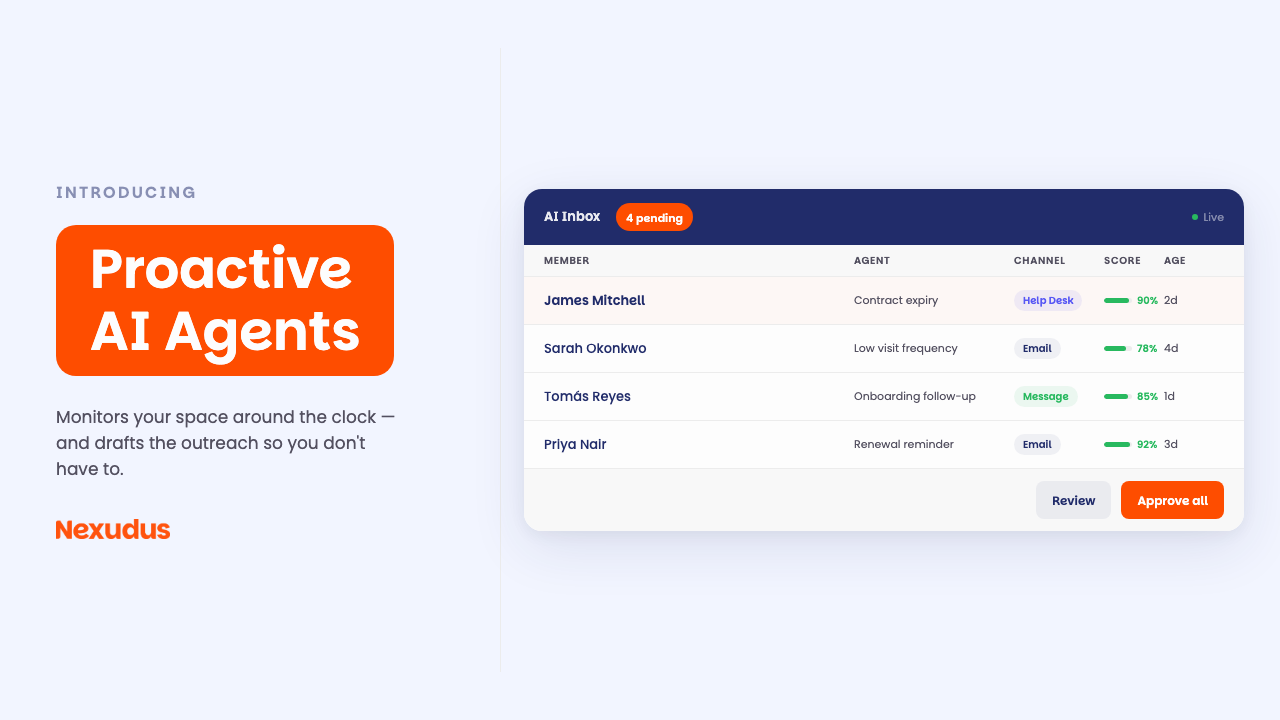
- More agents focus on member retention, onboarding, bookings, sales and revenue, spotting opportunities and drafting personalised outreach before they become missed opportunities.
Each agent has one responsibility, while sharing the same understanding of your workspace, members and business rules.
Configure an agent once and it works continuously in the background.
Review every proposed action in your AI Inbox, approve it, edit it or reject it. For agents you fully trust, switch on automatic execution and let them work independently within the guardrails you’ve set.
Build your own AI, or use ours
Not every workspace will adopt AI in the same way.
Some operators simply want AI that works out of the box. They want an AI Front Desk that answers questions, or proactive agents that quietly monitor their business in the background.
Others will want to connect ChatGPT, Claude or their own AI tools to Nexudus. Some will build custom workflows. Others will experiment with AI agents that solve problems unique to their business.
And an agent-ready platform supports both approaches.
That’s why we’re building specialist AI capabilities into Nexudus, while also providing technologies like our Model Context Protocol (MCP) server and command-line interface (CLI) for organisations that want to build their own AI workflows.
The goal isn’t to lock operators into one way of working. It’s to give them the freedom to adopt AI in the way that best fits their business, today and as the technology continues to evolve.


Want to know more about
how Nexudus could help your business?
We’re here to answer any questions you have.
Latest articles
-

- Coworking
- Coworking Resources
Practical AI Lessons for Coworking Operators from GWA Denver 2026
Damian on October 1, 2026 -
- Coworking
- Coworking News
- Technology
AI didn’t add a feature to coworking software. It’s rewriting what the product is.
Jane Robathan on September 30, 2026 -

- Coworking
- Coworking Resources
There’s No Excuse Not to Catch Retention Risk Early
Jane Robathan on September 3, 2026