


- Coworking
- Coworking Resources
How to Monetise Every Part of Your Coworking Space

When most operators think about monetising a coworking space, they focus on memberships, and desk rentals. While these are the backbone of any business, they’re far from the only opportunities. Every corner of your space – meeting rooms, event areas, wellness zones, and even quiet nooks – can contribute to revenue if approached strategically.
A modern coworking revenue strategy goes beyond desks. Today’s workforce is flexible, booking spaces on demand and using facilities at varying times. This shift means assets once considered “extras” can now be significant income streams. By analysing utilisation patterns, refining pricing, and optimising access, operators can unlock revenue that previously went untapped.
Where most coworking spaces leave revenue on the table
We’re used to treating services outside of rentals as ‘additional’ or ‘add-on’. Meeting room and wellness access becomes secondary to memberships, instead of being viewed holistically as part of a complete package. This old fashioned approach can lead to:
- Inconsistent pricing
- Generous or unclear access rules
- Underused assets sitting idle
Revenue remains untapped, not owing to lack of demand, but because it isn’t captured. Spaces might look full in certain areas, while others remain unused during off-peak hours.
Without a clear and dynamic structure for how space, services, and access are managed, potential income becomes incidental rather than predictable. Opportunities to create tiered experiences that optimise peak versus off-peak usage are missed – and it’s difficult to accurately align pricing with actual demand patterns across different user groups.


Demand has changed — your pricing and access should too
Hybrid work has changed how and when people use space. That’s a given.
In the past, demand was more evenly distributed, and offices were frequented every day of the week (with people maybe leaving early on a Friday). People favoured the certainty of desk access and could afford – in a more stable economic climate – to commit.
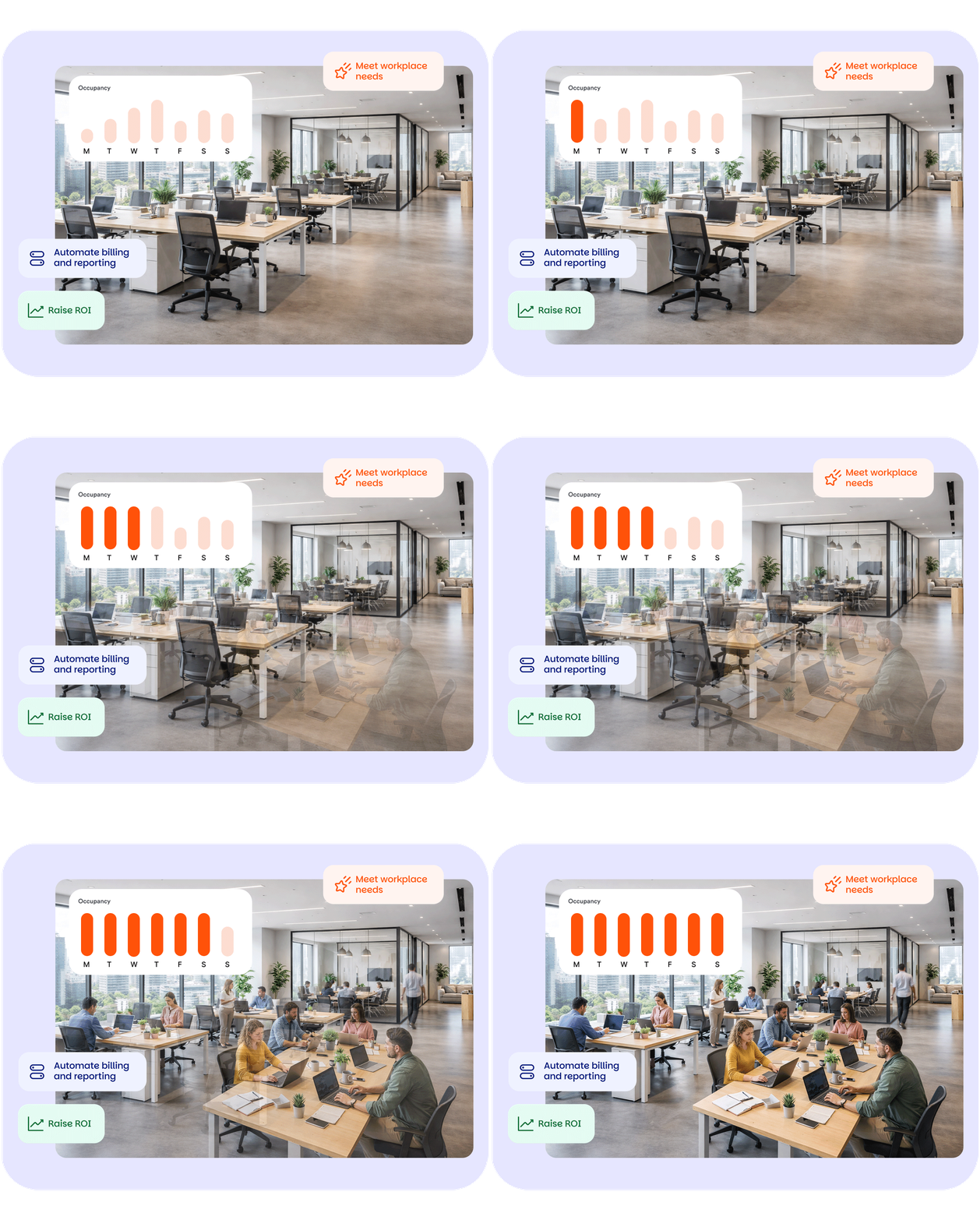
Compared to then, peak days are concentrated midweek, usage is more flexible and short-term and external bookings are more common. This shift means static pricing and fixed access models no longer reflect how space is actually used. And that’s where dynamic pricing shines.
Dynamic pricing allows operators to respond to these patterns by increasing rates during peak times and offering more financially accessible options during quieter periods. Understanding when and how your space is used is the first step in aligning pricing with real demand. It’s time to tap into your reporting and analytics to track occupancy, booking patterns, and peak usage across your desks, rooms, and amenities (more on that in the next section).
This shift has also driven demand for more flexible solutions such as fractional offices, where teams can access private space only on the days they need it.
As a result, operators need to think beyond fixed memberships and static pricing. The focus should be on creating flexible, demand-led access models that reflect how space is actually used – ensuring every product, from desks to private offices, is priced and positioned to capture its full value.

Monetising beyond desks: what your space can actually sell
When was the last time you took stock of your bookable assets? Your coworking space could be worth much more than the sum of its parts – and you don’t even need to increase its footprint.
Bookable resources can include:
- Meeting rooms
- Event spaces
- Podcast studios
- Wellness or leisure areas
Beyond that, there are opportunities to monetise:
- Memberships with different levels of access
- External bookings from non-members
- Local community usage outside standard working hours
- Fractional offices for hybrid teams
If your coworking space sits empty in the evenings or at weekends, and staffing permits, you could trial opening up to different audiences. This could take the form of an ‘out of hours’ coworking membership, for instance. Or you could rent event space to external users.
Offering a range of options allows you to cater to different needs and lifestyles, while making better use of your existing space. It’s important to lean into the data too.
If your data shows meeting rooms are underused in the late afternoons, you could allow a broader selection of member tiers to book them during these hours, or reduce credit costs at off-peak times. If mornings are always oversubscribed, booking limits can prevent overuse.
You could also refine rules around guest access, wellness areas, or hot desks – expanding availability during quiet periods and tightening it when demand is high. Over time, this creates a more balanced, intentional use of space, where access is aligned with real-time demand.
The role of pricing, packaging, and access
Maximising revenue isn’t just about picking the right price because it sounds right.
As Marc Navarro says, pricing shouldn’t be driven by competitor benchmarking alone, but by a clear understanding about how it’s positioned within the specific market context.
In other words, you need to understand what your service is worth in the eyes of your customers, and how it sits within the broader market.
For example, your meeting room and a competitor’s might look the same on paper, but one is in a prime location, comes with the best AV technology and has a stronger brand presence. If the higher end option matches the lower’s price, they could be undervaluing their asset and lose out on potential revenue.
On the other hand, if a space is more functional and designed for the budget-conscious, pricing it too highly to compete can reduce bookings.
It’s about carefully evaluating tangible and intangible factors such as room size, capacity, equipment quality, and overall finish, all of which shape a customer’s willingness to pay.
Again, demand-based variables need to be taken into consideration, including the time of day and day of the week. Peak periods come with higher value, while off-peak slots benefit from incentives to increase utilisation.
Even ‘type of user’ plays a part in pricing strategy: are they a loyal member or an external customer?
Layered pricing structures often work well. For instance, offering hourly, half-day, and full-day rates can gently guide members or customers to make longer bookings or fill gaps.
Finally, clearly defined access rules and inclusions are essential. Without this clarity, businesses risk revenue leakage through misunderstandings, overuse, or inconsistent enforcement, ultimately undermining both profitability and customer trust.
The power of strong onboarding
It’s important not to underestimate the importance of both onboarding and booking flows in the monetisation process. When both processes are well-designed and automated, members transition from interest to activation without unnecessary delays or confusion.
Availability is clear and rules are enforced automatically, with access granted upon verification.
This creates a smooth first experience and increases the likelihood of repeat usage. Members are more likely to understand how to use the space, when they can access it, and what they’ve paid for – reducing support queries while driving utilisation and long-term engagement.

Why utilisation matters more than adding more space
Focusing on how often space is used, rather than how much space is available, shifts the emphasis from expansion to efficiency. You probably already know that adding more space isn’t always the best way to earn more from your space.
The really satisfying opportunity is in making better use of what you already have. Utilisation is one of the most important indicators of performance, and analysing it can help you make targeted adjustments, including promotional pricing and improved scheduling. For instance, converting underused private offices into fractional offices can significantly increase utilisation, allowing multiple businesses to share the same space across different days.
Even seemingly small gains can quickly compound: filling one extra hour per day across several meeting rooms can translate into a meaningful increase in monthly revenue – without any additional overheads.
Focusing on building a more reliable and predictable income will temper fluctuations in demand and reduce your reliance on peak periods. As well as creating a steadier revenue stream, increased utilisation improves return on existing assets, and helps you make more informed decisions about when – or whether – to expand.


Where automation protects revenue (and reduces admin)
Manual processing creates gaps. When bookings, access, and pricing rely on staff intervention, inconsistencies and errors are inevitable – particularly when volume increases.
Common issues include:
- Inconsistent enforcement of rules across teams or shifts
- Missed charges, incorrect discounts, or outdated pricing
- Inventory being blocked, double-booked, or left unused
Although they seem small in isolation, over time they can compound into revenue leakage.
Automation protects revenue because operations become significantly more efficient. It facilitates a consistent, rules-based system that removes ambiguity and human error.
For example:
- Bookings are processed uniformly, with clear availability and no overlaps
- Access is automatically granted or restricted based on payment status
- Pricing structures, discounts and conditions are applied as intended, every time
Consistency has a positive impact on the member experience, which in turn impacts revenue, because a happy member is less likely to churn.
It creates a happier staff experience too, which – you guessed it – has a direct impact on the member experience.
A study by Gartner revealed that finance departments can save 25,000 hours of avoidable work annually through automation. Operational teams spend less time managing bookings, correcting mistakes, or handling disputes – and more time on higher-value activities.
Integrating automation at the point of purchase helps you protect revenue at the moment of conversion, while creating a more reliable buying experience.
NexCommerce ensures that pricing, availability, and access align in real time. Members can see accurate options, select the right package and complete payment without friction, and you can ensure that every booking is captured correctly.
It’s not just about saving time, but creating a more reliable and scalable operation.

Building a revenue system, not one-off income streams
Revenue doesn’t come from isolated decisions, but when everything works together.
Everything is connected. Pricing, utilisation, access, and demand need to align so that each part of the space contributes to overall performance. Meeting rooms, memberships and additional services are not separate streams – they’re part of a wider system.
Cost intentionally: take a structured approach to your coworking revenue strategy and turn what might seem like incidental income into a predictable, scalable revenue model.

Want to know more about
how Nexudus could help your business?
We’re here to answer any questions you have.
Latest articles
-

- Coworking
- Coworking Resources
Coworking Self-Service vs Staff Dependency: How the Member Experience Really Scales
Kate Tattersfield on March 30, 2026 -

- Coworking
- Coworking Resources
- Hybrid work
How to Launch Fractional Offices in Your Coworking Space
Kate Tattersfield on March 25, 2026 -
- Coworking
- Coworking Resources
- Hybrid work
What are Fractional Offices? A Guide to Selling Hybrid Office Space
Emily Nguyen on March 23, 2026