


- Coworking Resources
- Hybrid work
Can companies implement the coworking model?

In recent years, the coworking movement has broadened; there are more and more spaces, which reach an increasingly wider community and have attracted investments of around $1bn in the last year. This has undoubtedly helped the concept be progressively more “in trend” and the number of medium-sized and large companies interested in the ins and outs of the model is on the rise. As a result, there are also more events and training programmes aimed at promoting collaboration in professional working environments. Since 2011, Unwired has hosted the Worktech conference on the future of work, spaces, technology and innovation. The event has been held in cities all over the world and the next one will take place in Singapore in September. London is also going to be host to the first edition of “The Social Workplace Conference” organised by Global Enterprise, the consulting firm behind Coworking Europe.
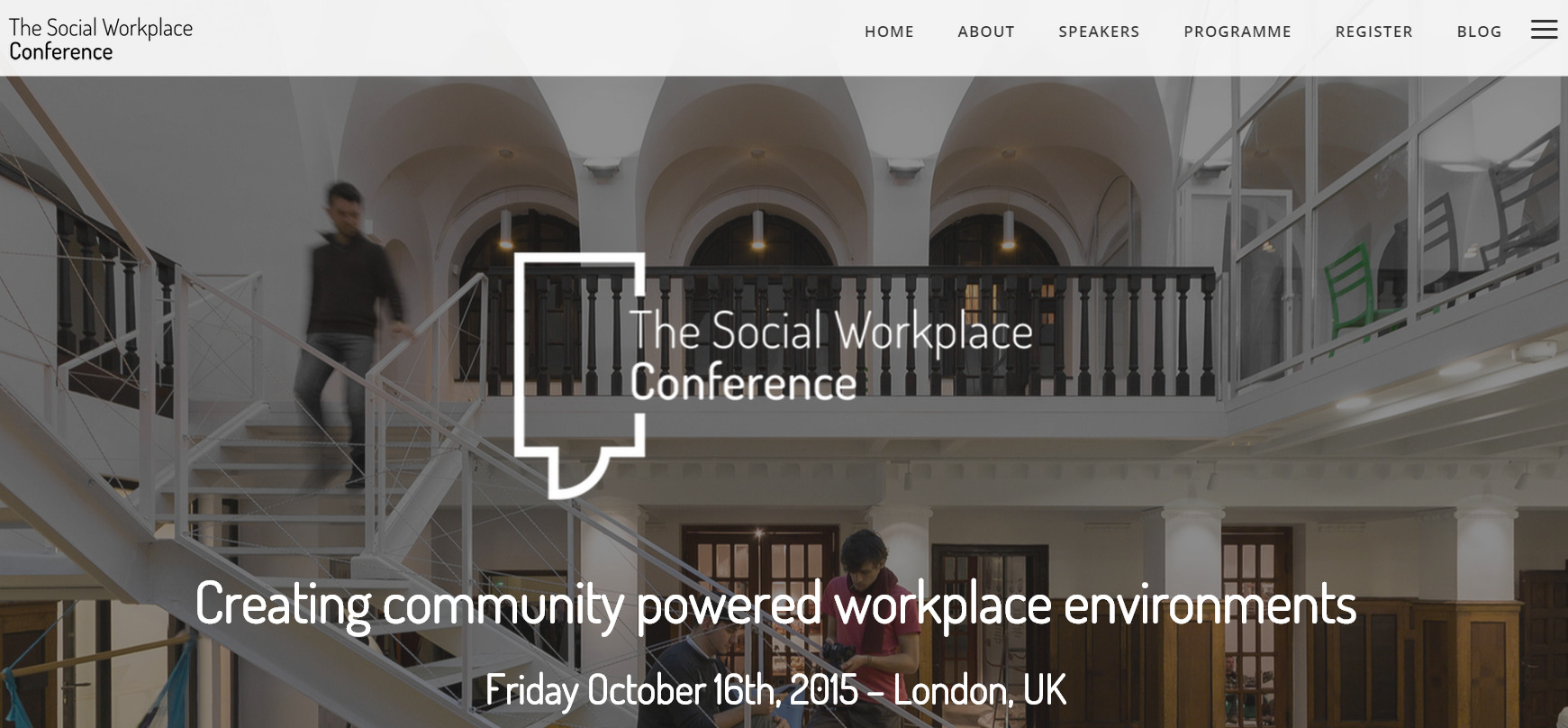
Photo source: The Social Workplace Conference website
How can medium-sized and large companies benefit from the virtues of coworking? Can the coworking model be extrapolated to these organisations? Let’s look at two situations or models:
1.- Companies that use spaces’ infrastructure
The number of companies that allow their employees to work remotely or teams that are spread across the world is on the increase. Buffer is a great example of one of these teams, with 31 people in 22 different countries at present. Joel Gascoigne (CEO) explains the advantages and disadvantages of working with this company model. The norm is that these teams turn to coworking spaces for a base outside of their homes. There are several advantages for this type of model:
- Productivity: Although we shouldn’t generalise, we are faced with so many distractions when we work from home. A coworking space offers a professional environment.
- Reduced costs: Companies can reduce their investment in offices by combining working remotely with using work spaces as and when they’re needed.
- Interaction: Coworking spaces are diverse and open. The collisions that occur are positive for a project’s development.
- Flexibility: Sometimes companies may be put off by their remote team sharing a space due to privacy and confidentiality issues. However, more and more spaces are offering private offices. Spaces like Indiegrove, Mission50 and The Working Capitol all combine private offices for teams and other more flexible models.
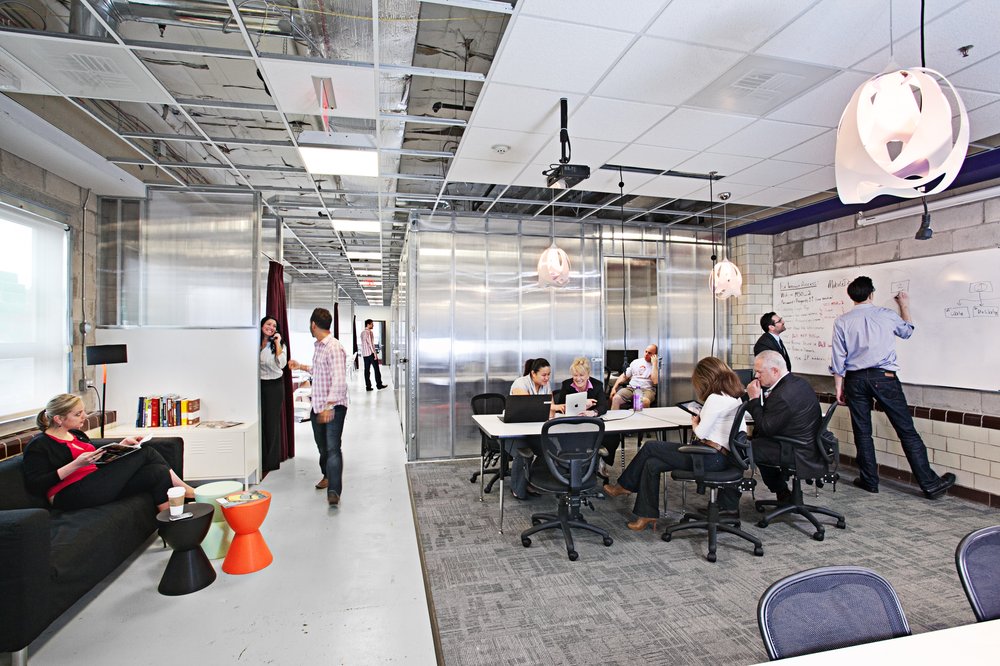
- Horizontality: A coworking space mainly hosts independent professionals or small companies. This means that there are no hierarchical relationships, which can exist in some large companies, like Facebook or Twitter.
- Bootstrapping: Many coworking spaces get their own community involved in the space’s design and construction (ideas, assembly, etc.). This really helps develop a sense of belonging and identity.
- Diversity: While the main motto in large companies is unambiguous and corresponds to the organisation’s macro-vision, we can find several projects, interests and various “mottos” in a coworking space.
Want to know more about
how Nexudus could help your business?
We’re here to answer any questions you have.
Latest articles
-

- Coworking
- Coworking Resources
Coworking Self-Service vs Staff Dependency: How the Member Experience Really Scales
Kate Tattersfield on March 30, 2026 -

- Coworking
- Coworking Resources
- Hybrid work
How to Launch Fractional Offices in Your Coworking Space
Kate Tattersfield on March 25, 2026 -
- Coworking
- Coworking Resources
- Hybrid work
What are Fractional Offices? A Guide to Selling Hybrid Office Space
Emily Nguyen on March 23, 2026