


- Coworking
- Coworking News
Coworking Teams Are Burning Out. What Can Operators Do About It?

Coworking teams are under more pressure than ever. Hybrid schedules shift daily. Member expectations climb. Operational complexity grows with every new plan, event, or location you add. Meanwhile, staff bandwidth isn’t growing to match it.
Operators often assume coworking teams burn out because teams “just need to be more organised,” or “get better tools.” But the root cause goes deeper: an unseen operational load that compounds quietly until the team feels overwhelmed.
This post explores that hidden load through operator insights and shows why clarity is the first step to protecting your people, improving your member experience, and building a more resilient space.

The hidden workload operators don’t see
Many operators don’t realise how much administrative work is happening behind the scenes until it starts taking over their week. Tasks like managing check-ins, issuing invoices, chasing payments, updating spreadsheets, or adjusting access permissions are rarely visible, but accumulate quickly as membership grows.
A recent Nexudus case study with Square Works Bristol highlights what’s hidden. Before consolidating operations, their team was spending significant time each week manually handling bookings, processing payments, managing member communication, and keeping CRM records up to date.
After implementing Nexudus, they reported saving up to 18 hours per week previously lost to admin – simply by automating check-ins, billing, bookings, and workflows. That kind of time saving exposes just how much invisible labour is embedded in day-to-day coworking operations, and how much bandwidth operators can win back once it’s surfaced and systemised.


The impact on team morale, member experience, and revenue
Burnout in coworking doesn’t stay in the back office, it spills into every part of the member journey.
Morale declines quietly
When community and operations staff spend their days chasing small issues instead of doing meaningful work, motivation erodes, and teams become reactive rather than proactive. This doesn’t happen by choice; it’s caused by a relentless environment.
Member experience suffers
If coworking thrives on human moments, warm welcomes, thoughtful introductions, and human check-ins, these moments vanish because teams are stretched thin.
Slower service and increased errors
Then of course, pressure leads to mistakes, not due to carelessness, but because humans under strain miss things: plan updates, booking changes, visitor details, billing adjustments.
Revenue opportunities get missed
Operators often look for bold growth levers: more desks, new memberships, expansions. But the biggest revenue leaks are often operational: slow tours, slower responses, unclear data, or inconsistent processes.
What the best-run spaces do differently
High-performing coworking spaces share a set of operational principles, not specific tools.
1. They design workflows around people
They build human-friendly processes first, then choose technology that complements those processes, not the other way around.
2. They eliminate unnecessary repetition
Every repeated action adds friction. The best spaces identify these loops early and redesign them.
3. They centralise systems
A single source of truth reduces confusion, duplication, and interruptions.
4. They document predictable processes
Clear workflows reduce stress and create consistency across roles, locations, and teams.
5. They protect attention
They define who handles what and create norms that reduce interruptions so community teams can actually focus on the community.


Why operators need clarity before they automate anything
Automation is powerful but only when applied intentionally.
Without understanding the true operational reality, automating is like treating symptoms without diagnosing the condition.
Burnout often stems from:
- Unseen task bottlenecks
- Processes that repeatedly cause mistakes
- High-effort workflows with low impact
- Friction points that quietly drain attention
Operators need clarity on:
- Where manual work piles up
- Which processes break most often
- Where teams spend invisible effort
- Which workflows provide the weakest ROI
A strong example of this comes from Impact Hub King’s Cross. They once managed nearly every aspect of their operation manually: members tracked in Excel, invoices and billing handled by hand, and bookings managed through ad-hoc processes. It worked, but it hid a huge amount of repetitive admin that wasn’t immediately obvious.
After adopting Nexudus, their operations became significantly smoother: meeting-room bookings and member sign-ups were automated, financial admin and debt-chasing dropped to a fraction of the time they used to take, and the team ultimately freed up the equivalent of 0.5 full-time staff. That clarity — seeing exactly where time was being spent, where mistakes happened, and where admin load was heaviest, allowed them to apply automation where it truly mattered and avoid wasting effort elsewhere.
If operators want to protect their teams, they need a full picture of the space’s operational reality. That’s what the Coworking Compass is built for.
How the Coworking Compass helps reduce operational burnout
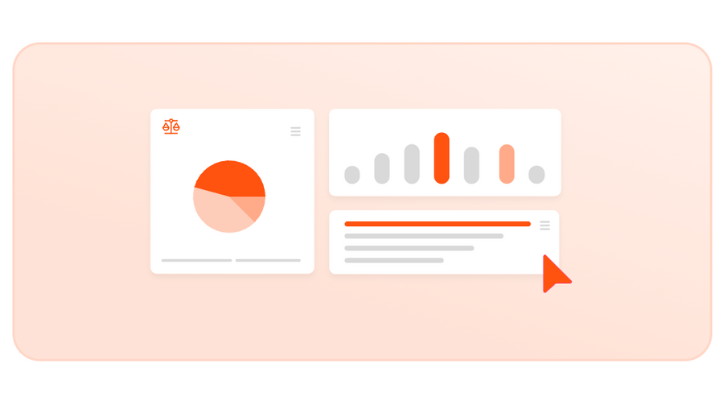
The Coworking Compass is a quick, 10-minute assessment that benchmarks your space against millions of data points from similar coworking businesses.
Once completed, you receive a personalised report showing exactly where you can level up across utilisation, revenue, automation, and pricing.
It highlights:
- Your overall operational maturity score, showing whether your space is Foundational, Developing, Mature, or Leading and what that means for your next stage of growth.
- A breakdown of your performance across critical business areas: Space and Resource Utilisation, Service and Revenue Streams, Operations and Automation, Pricing Strategy, and Legal / WiFi / Network Infrastructure.
- A clear ‘What’s working vs. what needs work’ diagnosis for each area, surfacing opportunities that operators often overlook like underused rooms, pricing gaps, or missed revenue channels.
- Actionable recommendations tailored to your operational maturity level, from layout changes and diversified services to predictive automation and dynamic pricing experiments.
- Tailored next-step guidance that helps you prioritise high-impact improvements.
Instead of guessing what’s causing pressure, operators get a structured, evidence-based map of where improvements will have the biggest impact.
Want to know more about
how Nexudus could help your business?
We’re here to answer any questions you have.
Latest articles
-
- Coworking
- Coworking Resources
- Hybrid work
What are Fractional Offices? A Guide to Selling Hybrid Office Space
Emily Nguyen on March 23, 2026 -
- Coworking
- Coworking Resources
AI in Coworking: How AI is Transforming Operations and Member Experiences
Emily Nguyen on March 20, 2026 -

- Coworking
- Technology
Best Meeting Room Booking Systems for Flexible Workspaces: 2026 Comparison
Jane Robathan on March 13, 2026