


- Coworking
- Technology
Essential Meeting Room Technology for Coworking Spaces

For many coworking operators, meeting rooms are both a key revenue driver and a recurring operational challenge.
Operators are expected to deliver spaces that support hybrid collaboration, run smoothly day to day, and clearly justify their price.
For coworking spaces, the right meeting room technology does two things at once: it improves the experience for members, and it makes room usage easier to manage, measure, and optimise. This guide focuses on the technology that actually delivers ROI.
What members expect from meeting rooms today
Member expectations have shifted quietly but significantly. Most users assume that meeting rooms will work without explanation, support hybrid participation by default, and reflect the price they are paying.
In practical terms, that means:
- Reliable hybrid collaboration tools that do not require setup or troubleshooting
- Clear room availability and straightforward booking
- Comfortable environments that support short, frequent meetings
- A sense that the room is actively managed, not improvised
Technology plays a direct role in shaping these perceptions. When meeting rooms feel outdated or unreliable, booking rates suffer — even if the space is technically available.



Core meeting room technology every coworking space needs
While expectations have risen, the core components of effective meeting room technology are still consistent. What has changed is how tightly these tools are expected to work together.
Below are the five essentials most coworking spaces still rely on.
1. Smart Meeting Room Booking Systems
A modern meeting room setup should reflect real usage, not just reservations.
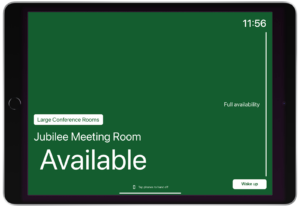
Smart booking systems integrate calendars, access control, and in-room signals to minimise no-shows and confusion. With Nexboard, operators get a single view of booking patterns, live room status, and historical utilisation — making it easy to identify which rooms perform well and which create friction for members. When booking is intuitive and visibly managed, members trust the system and use space more efficiently.
Nexboard works across meeting rooms, phone booths, hot desks, and event spaces — so your entire venue runs on one consistent system. Members can book instantly from a tablet placed right outside the space, removing any guesswork about availability.
2. Displays and Presentation Technology
Commercial‑grade displays paired with reliable wireless screen sharing are now the baseline. Consumer TVs often struggle with longevity and support in shared environments.
Presentation tools should work instantly without instructions, especially for short, back‑to‑back meetings.

3. Audio and Video Conferencing Hardware
All‑in‑one conferencing bars have largely replaced modular setups. They simplify installation, reduce support tickets, and deliver more consistent audio and video quality across rooms.
This consistency matters as hybrid meetings remain the default rather than the exception.

4. Connectivity and Power
Fast, stable Wi‑Fi underpins every other technology choice. Meeting rooms should also provide accessible power for laptops and peripherals without relying on extension leads or ad‑hoc solutions.
Poor connectivity quickly undermines perceived room quality, regardless of the equipment installed.

5. Environmental Controls and Room Comfort
Lighting, temperature, and acoustics increasingly influence how members rate rooms. Smart controls help maintain comfort during peak usage while reducing energy waste during quieter periods.

AI-enabled and smart meeting room tools
Where meeting room technology starts to deliver measurable ROI is in automation and insight.
Occupancy Sensors and Auto-Release
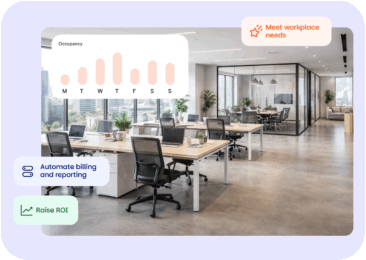
Occupancy sensors help identify no‑shows and free rooms automatically. Over time, they also provide accurate utilisation data, which is more reliable than calendar bookings alone.
Automated Reporting and Insights
AI‑enabled reporting tools summarise room usage patterns without manual analysis. Instead of exporting spreadsheets, operators can see trends and act on them quickly.
Environmental Automation
Smart lighting, temperature controls, and noise monitoring contribute to comfort while reducing energy waste during quiet periods. These tools move meeting room management from reactive to intentional.

Cost vs value: Choosing the right technology mix
Not every meeting room needs the same level of investment. What matters is alignment between a room’s purpose, the experience promised to members, and the return operators expect.
Rather than focusing on exact prices, it is more useful to think in terms of relative investment and value.
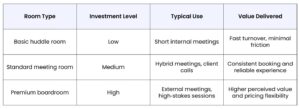
Rooms with a clearer match between purpose and technology tend to book more consistently and justify higher rates, even without premium hardware in every space.

Choosing technology that scales with your space
The best meeting room technology is consistent, measurable, and easy to maintain.
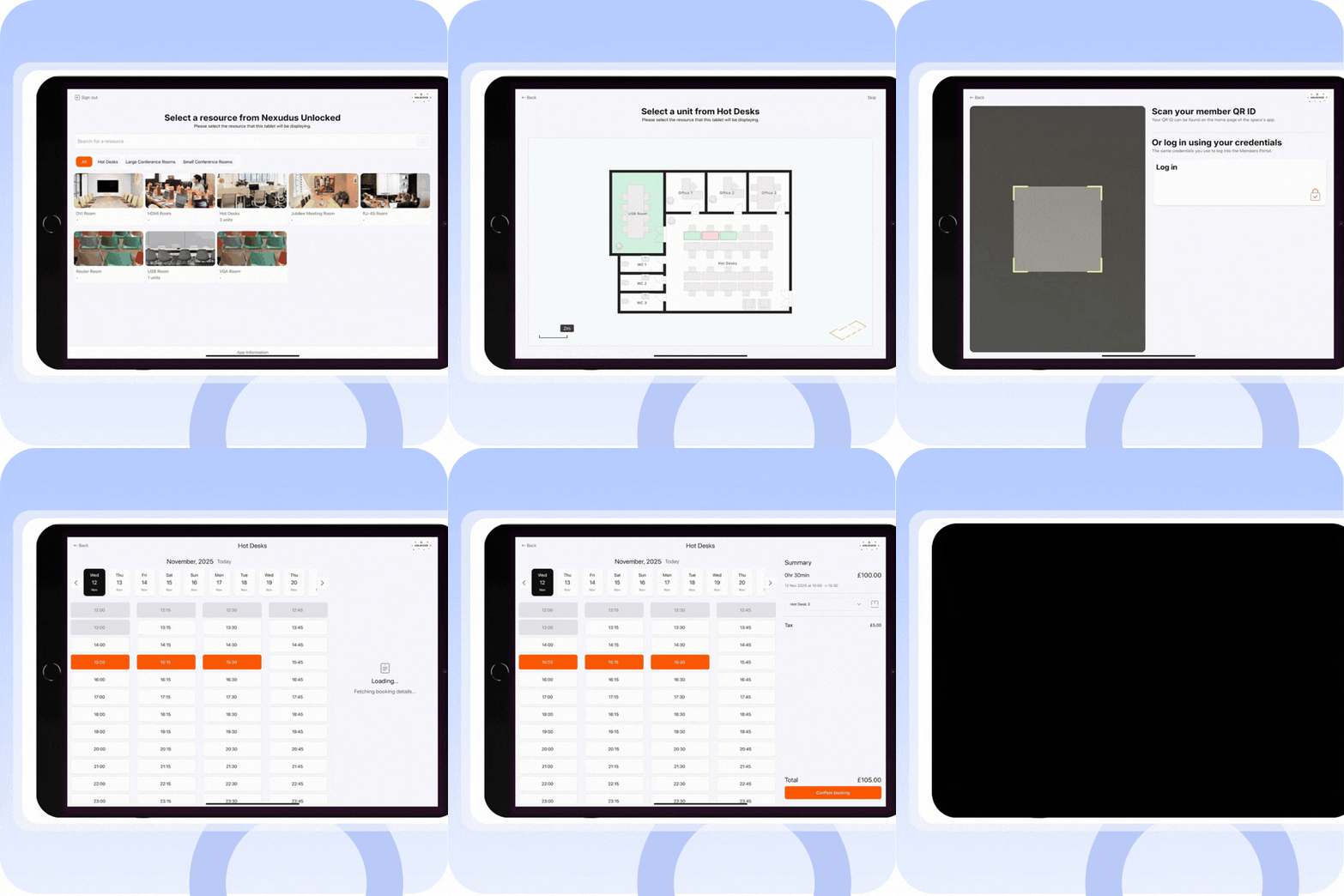
Platforms like Nexudus help operators connect booking, utilisation data, and room configuration in one place, making it easier to understand what works and where to invest next.
When usage data guides technology decisions, meeting rooms become easier to manage and more valuable to members.

Want to know more about
how Nexudus could help your business?
We’re here to answer any questions you have.
Latest articles
-

- Coworking
- Coworking Resources
- Hybrid work
How to Launch Fractional Offices in Your Coworking Space
Kate Tattersfield on March 25, 2026 -
- Coworking
- Coworking Resources
- Hybrid work
What are Fractional Offices? A Guide to Selling Hybrid Office Space
Emily Nguyen on March 23, 2026 -

- Coworking
- Coworking Resources
AI in Coworking: How AI is Transforming Operations and Member Experiences
Emily Nguyen on March 20, 2026