


- Coworking
- Technology
Best Meeting Room Booking Systems for Flexible Workspaces: 2026 Comparison
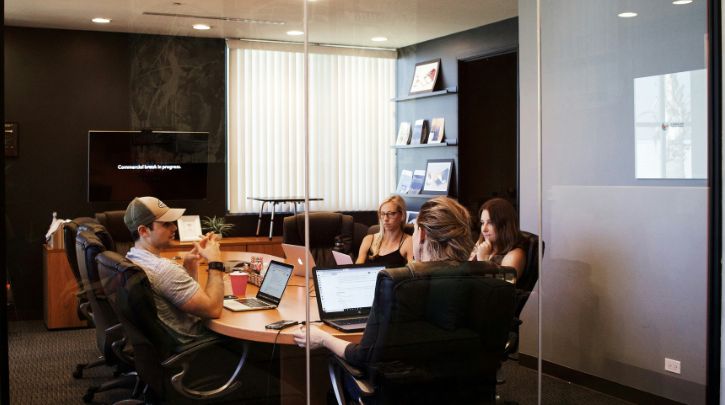
Most meeting room tools seem to do what they should, they show availability, connect to calendars and a few let people book from a screen. But, when people sneak into rooms without booking them, meetings overrun, or no-shows block availability, staff end up stepping in.
The most common mistake operators make is evaluating tools against a generic feature checklist. A better question is: what problem are you trying to solve?
This guide breaks down five leading tools by the job they were designed to do — from simple room visibility to hybrid workplace analytics and booking governance. And for spaces where meeting rooms generate revenue, we’ll look at the tools designed to protect that too.
TL;DR
Joan → Best for room visibility in offices where meeting rooms are shared internally and free to use.
Humly → Premium room panels designed for enterprise offices with shared meeting spaces.
Robin → Workplace platform focused on analytics and hybrid work planning across large offices.
Skedda → Booking rules, permissions, and governance across corporate estates.
NexBoard → Booking and payment at the door for revenue-generating spaces.
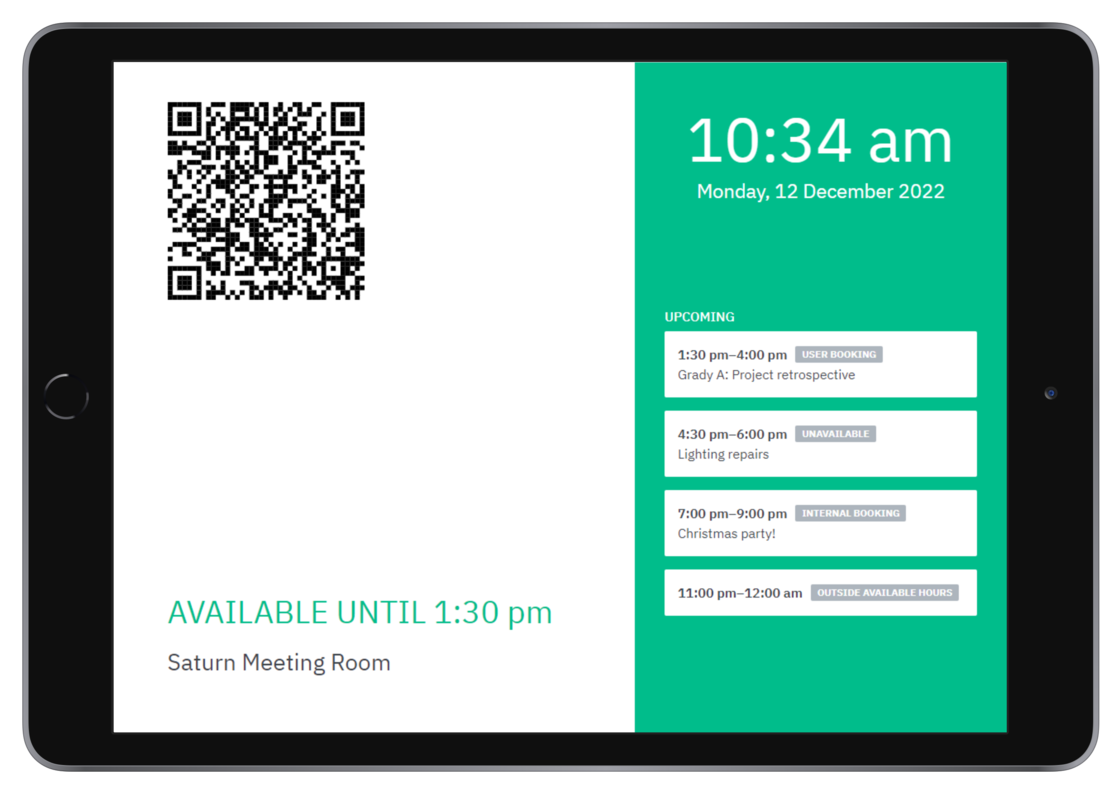
1. Joan – the high-end, hardware-first display
Built for
Offices where meeting rooms are shared internally and free to use.
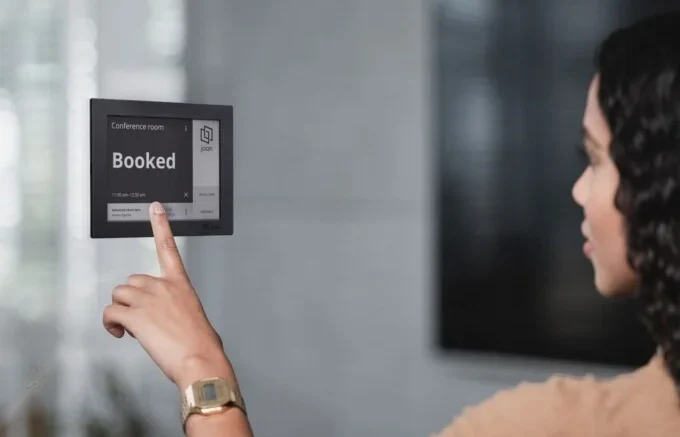
Joan has become the default choice for meeting room displays for good reason. It’s hardware-led, polished, and genuinely easy to deploy. Joan’s e-paper displays are a standout — low power, clear at a glance, and available across a range of sizes from compact door panels to larger overview screens.
What Joan does well
Joan’s meeting room automation is focused on in-room and at-door behaviour.
- Purpose-built e-paper displays for meeting room doors
- Comes with Joan’s own workplace software, with plans that scale by users and devices
- Real-time sync with Google Calendar and Microsoft 365
- Tap-to-book from the screen
- Automatic room release when no one checks in
- Broader platform coverage for desks, visitors and analytics
For coworking operators and flexible workspaces, Joan can also be paired with dedicated coworking software. Nexudus integrates with Joan, so operators can use Joan displays at the door while managing the wider member and operational layer in Nexudus.
Joan’s pricing
Joan’s platform starts from €49 per month, scaling based on the number of users and devices. Hardware (such as the Joan 6 RE e-paper display) is a one-off purchase at around €349 per room. All platform tiers include the full feature set, with cost scaling by size rather than features.
Joan is the right fit if
You run a corporate office, want reliable hardware with calendar integration, and don’t need to charge for room usage.
2. Humly – the premium corporate room panel
Built for
Polished hardware deployments in enterprise environments.
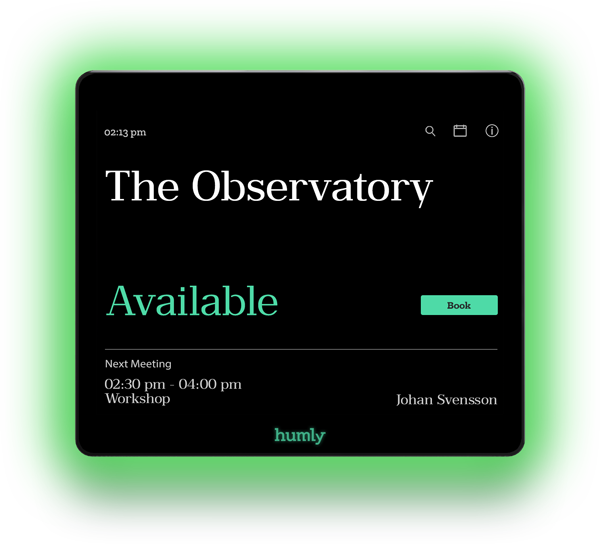
Humly occupies a similar space to Joan but with a distinct design focus and strong enterprise pedigree. Its displays are award-winning and designed to blend into the office environment rather than stand out from it. If visual quality and device longevity matter to your organisation, Humly is worth serious consideration.
What Humly does well
- Premium room displays designed to integrate into modern office interiors
- Shows live room availability and supports walk-up booking
- Allows meeting extensions directly from the display
- Automatically releases rooms when no one checks in
- Expanding sensor ecosystem (Humly Sense) for occupancy data
- Broader workplace suite covering rooms, desks, visitors and wayfinding
Like Joan, Humly works particularly well when paired with coworking management software. Humly integrates with Nexudus, allowing operators to use Humly displays at the door while Nexudus manages the member and commercial layer behind the scenes.
Humly’s pricing
Humly is device-led and sold through distribution partners, so pricing varies by reseller. Hardware and software are licensed separately, with costs typically scaling by room count.
Humly is the right fit if
You want high-end room displays for a corporate or professional environment and are comfortable pairing them with a platform that manages the operational layer.



3. Robin – the enterprise workplace platform
Built for
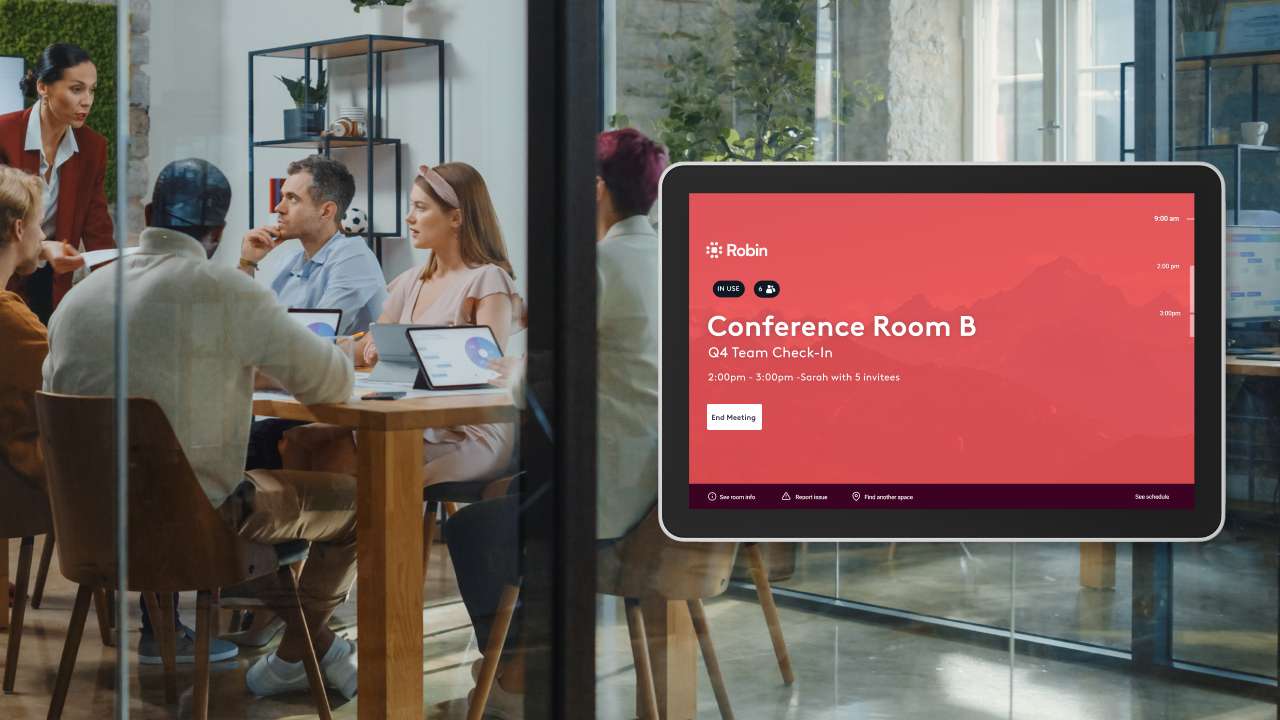
Robin is a workplace platform in the fullest sense. Room displays are only one component of a broader system designed to help organisations understand, plan, and optimise how their offices are used. If your challenge is less about individual bookings and more about utilisation across multiple locations, Robin is built for that.
What Robin does well
Robin’s automation is workflow-driven, aimed at reducing meeting friction.
- Corporate workplace platform covering desks, rooms and office services
- Smart scheduling that recommends rooms based on capacity, equipment and attendee location
-
Meetings can trigger service workflows such as AV setup, catering or IT support
- AI-assisted tools that suggest desks and rooms based on past behaviour
- Extensive reporting with utilisation data, no-show tracking and cross-office comparisons
- Predictive insights to support long-term space planning
Robin explicitly targets larger organisations, typically those with 500 or more employees, and positions itself as a platform investment rather than a standalone room booking tool.
Robin’s pricing
Quote-based. Robin does not publish fixed pricing; cost varies based on organisation size, number of desks and rooms, and the depth of analytics and integrations required.
Robin is the right fit if
You manage hybrid work across a large corporate office estate and need deep analytics to guide long-term workplace and space planning.
4. Skedda – the booking rules and permissions engine
Built for
Governance and self-service booking with granular control.
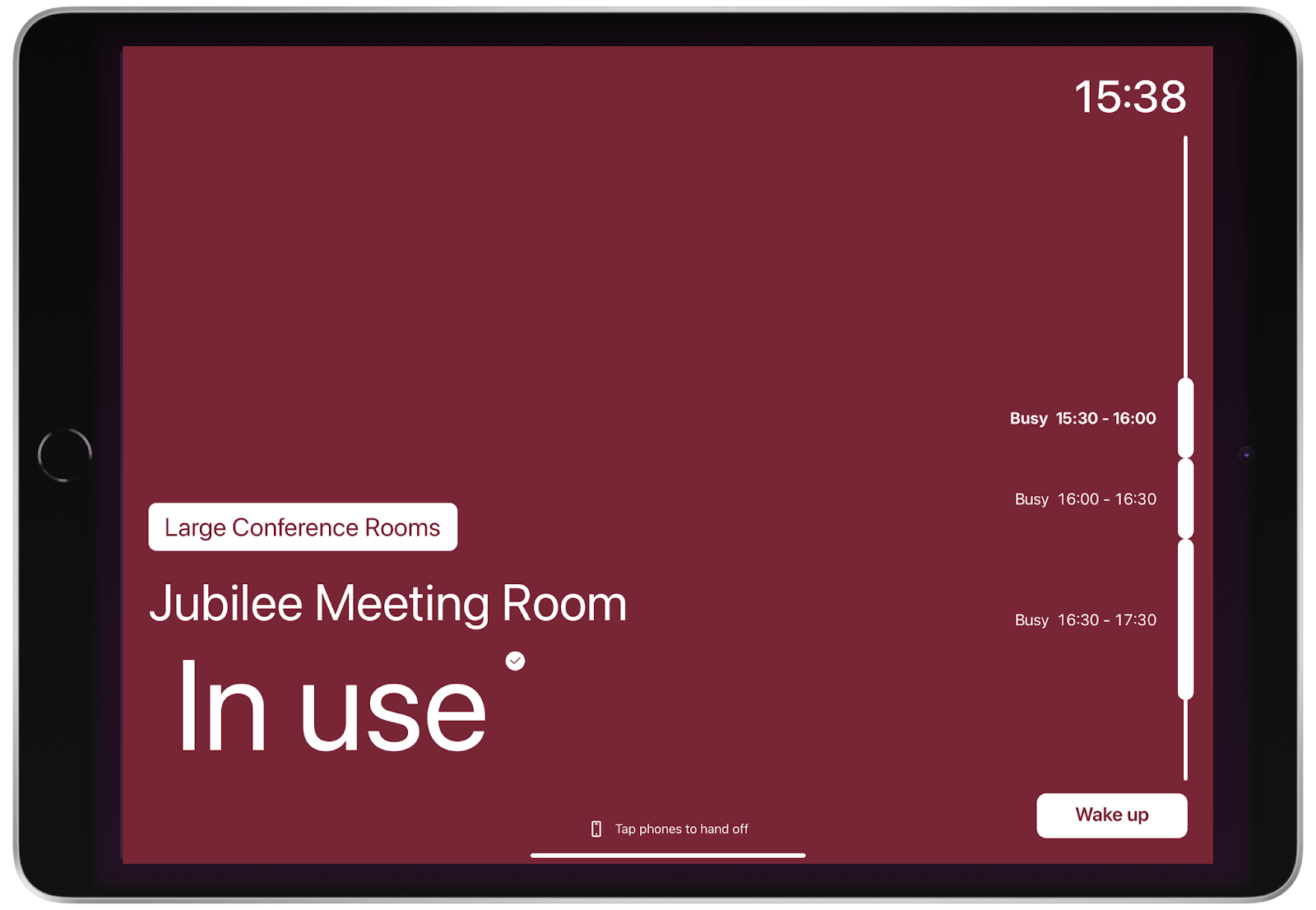
Skedda is a software-first platform focused on who can book what, when, and under what conditions. It’s popular with organisations that need detailed booking rules without adopting a full workplace platform. Universities, studios, healthcare facilities, and shared spaces with multiple user types are common examples.
What Skedda does well
Skedda’s automation focuses on governance rather than on in-space interaction.
- Granular booking rules based on user roles or tags
- Booking quotas, time windows, buffer times and approval workflows
- Automated check-in using Wi-Fi presence detection
- Interactive floor plans for visual room and resource booking
- Online payments supported through Stripe
- Hardware-agnostic — works on standard tablets or displays
Payment can be collected during the booking process online rather than at the door.
Skedda’s pricing
Tiered SaaS plans start from $99 per month on an annual contract. Pricing scales based on the number of spaces managed.
Skedda is the right fit if
You need strict booking governance, role-based permissions, and a flexible software layer that works with existing hardware
5. NexBoard – booking and payment at the door
Built for
Coworking operators who sell meeting rooms, meeting pods, event spaces and phone booths.
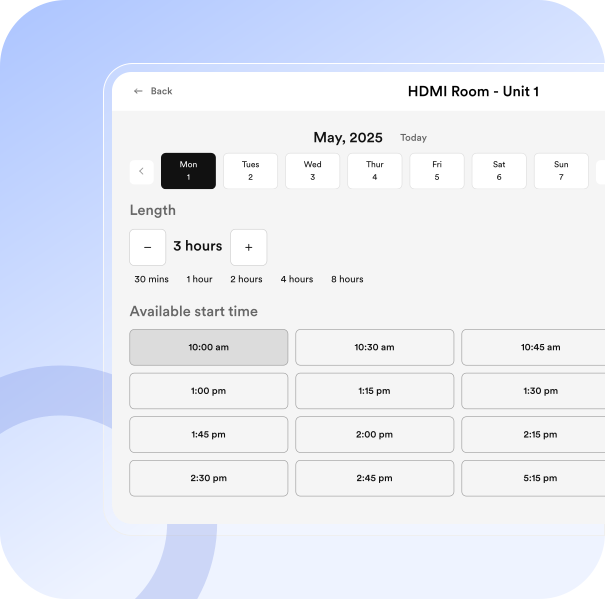
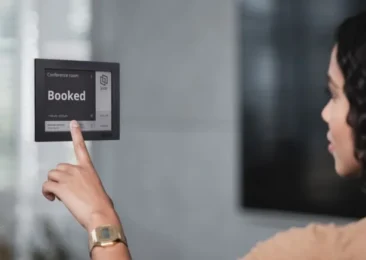
NexBoard is a tablet app built for spaces where rooms and shared resources generate revenue. Place it outside a room and it becomes a live booking point: members can check availability, book on the spot, check in, extend or end a session, and complete payment from their phone.
It handles who can book, how they pay, and whether they show up.
What NexBoard does differently
- Book and pay at the door
- Enables walk-up booking directly from the tablet
- Allows check-in, extensions and early release of bookings
- Makes room usage visible to staff, helping operators spot unbooked use
NexBoard can be used across meeting rooms, phone booths, hot desks or event spaces. A tablet placed outside the space works in the same way and updates activity across the Nexudus platform.
NexBoard’s pricing
NexBoard is a free companion app for Nexudus users. Nexudus plans start from £150 per month.
NexBoard is the right fit if
Rooms are a meaningful revenue line, you want bookings paid in advance, and you want visibility of activity across linked resources and locations.
Side-by-side comparison
| Capability | Joan | Humly | Robin | Skedda | NexBoard |
|---|---|---|---|---|---|
| Shows availability | ✅ | ✅ | ✅ | ✅ | ✅ |
| Book from the screen | ✅ | ✅ | ✅ | ❌ | ✅ |
| Online payment | ❌ | ❌ | ❌ | ✅ (Stripe integration) | ✅ (QR payment at the door) |
| Payment is prompted at the room | ❌ | ❌ | ❌ | ❌ | ✅ |
| Helps spot unbooked use | ❌ | ❌ | ❌ | ❌ | ✅ |
| Native Nexudus integration | ✅ | ✅ | ❌ | ❌ | ✅ |
Final takeaway
There’s no single best meeting room tool — there’s the right tool for the problem you’re trying to solve. Joan and Humly are excellent choices for corporate office hardware. Robin is the platform for large enterprises managing hybrid work at scale. Skedda gives you booking governance and flexibility without the enterprise price tag.
If your rooms generate revenue and you need that to be enforced without relying on staff, that’s a specific problem and NexBoard is made for it. For many operators, the best answer isn’t choosing between hardware and software; it’s pairing the right display with the right platform.

Want to know more about
how Nexudus could help your business?
We’re here to answer any questions you have.
Latest articles
-

- Coworking
- Coworking Resources
How to Monetise Every Part of Your Coworking Space
Kate Tattersfield on April 1, 2026 -
- Coworking
- Coworking Resources
Coworking Self-Service vs Staff Dependency: How the Member Experience Really Scales
Kate Tattersfield on March 30, 2026 -

- Coworking
- Coworking Resources
- Hybrid work
How to Launch Fractional Offices in Your Coworking Space
Kate Tattersfield on March 25, 2026