


- Coworking
- Coworking Resources
- Hybrid work
What are Fractional Offices? A Guide to Selling Hybrid Office Space
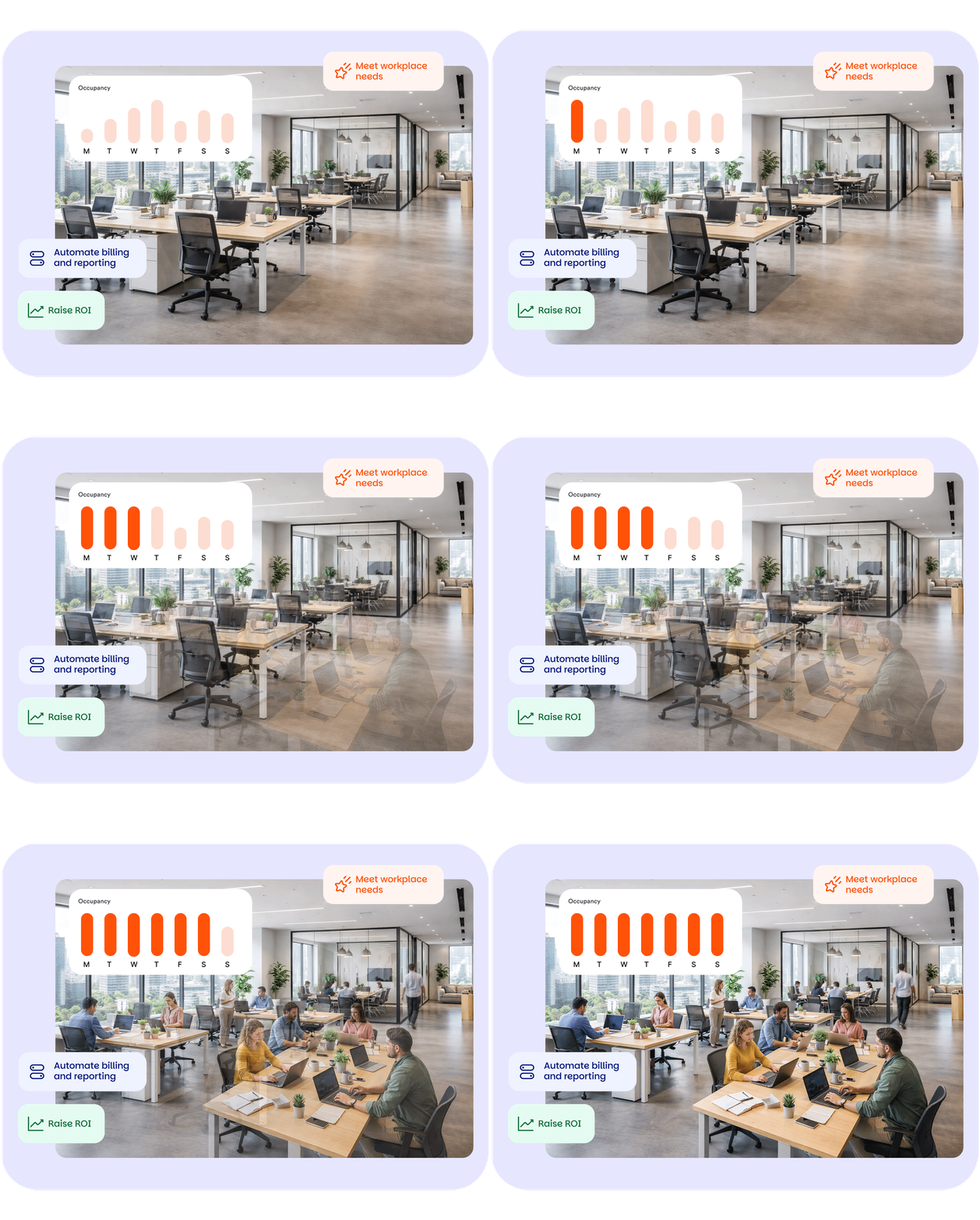
Hybrid work is reshaping how businesses approach office space. Instead of maintaining a permanent office, many teams are looking for flexible options supporting occasional in-person collaboration, without the cost of a full-time workspace. This shift drives demand for fractional offices – where multiple businesses share access to a private office on a scheduled basis.
For coworking operators, fractional offices create a new business opportunity to sell hybrid office space, adding another layer to your services. Let’s look at how you can sell hybrid office spaces in more detail.
What are Fractional Offices?
A fractional office is a private office shared by multiple businesses. Instead of one company renting the space full time, several businesses use the office on a pre-agreed schedule throughout the week or month.
Say a team uses an office on Mondays and Tuesdays. Rather than that space sitting empty for the remainder of the week, a fractional office will be used by another company on Wednesdays and Thursdays. During their allotted time, each business gets exclusive use of the office, giving them the right amount of privacy without paying for it every day.
In traditional shared workspaces, multiple people work in the same room at once. Meanwhile, fractional offices allow businesses to share office space in a more organized way – by splitting time.
For coworking operators, this model transforms a single office into a flexible resource supporting multiple members.

Why hybrid work is driving demand for flexible office access
The rise of hybrid working lifestyles is one of the biggest reasons fractional offices are becoming more popular. Many businesses allow their teams to split their time between remote work and in-person collaboration, meeting in the office a few days per week for brainstorming sessions, project work, or team meetings, before working remotely from home or another third space the rest of the week.
This shift is enabling companies to look for hybrid office spaces that better support flexible work patterns. Recent coworking industry analysis of fractional offices highlights how businesses are increasingly questioning the value of paying for offices only when in use a few days per week.
By taking up hybrid working office spaces, businesses can access a dedicated workspace when they need it, and teams can plan office days, bringing everyone together to collaborate.
For coworking spaces, this shift toward hybrid work opens the door to new workspace models designed specifically for modern teams.

Who uses fractional offices?
Fractional offices are particularly attractive for businesses operating with flexible or hybrid working arrangements. The following business types benefit from fractional offices over a full-time private office:
- As start-up culture is lean and fast-paced, start-up businesses benefit from a professional workspace without paying for a full-time office. The model also supports their typical hybrid working patterns, providing a central meeting spot for productive team collaboration.
- Consultants and professional service providers are another strong fit. Many consultants work independently but still need a private space to meet clients or conduct focused work.
- Distributed teams also use fractional offices as a part-time headquarters. In fractional offices, remote employees can schedule regular office days where team members meet for collaboration, training, or planning sessions.
- Small businesses transitioning to hybrid work are replacing permanent offices with hybrid office spaces, where teams gather when needed.
How fractional offices fit into the modern coworking model
The nature of coworking is flexible, with the business model typically offering a mix of hot desks, dedicated desks, meeting rooms, and private offices. Adding another service layer to the coworking ecosystem, fractional offices bridge the gap between shared workspaces and full-time offices.
While hot desks work well for individuals, many businesses prefer the privacy and consistency of a private office. Fractional offices allow coworking operators to maintain that level of privacy while maintaining a flexible workspace model.
Fractional offices also meet the growing demand for hybrid working office space. Businesses that no longer need a permanent office can still access a professional environment to bring their teams together. This makes fractional offices complement coworking offerings rather than replace them. Members can move between different workspaces to suit their needs, creating a more dynamic and adaptable workspace environment.

The benefits of fractional offices for coworking spaces
While fractional offices prove useful for businesses, the model also presents an advantageous business case for coworking operators, such as:
Improving space utilisation
Private offices are often the most valuable areas in a coworking space, providing a reliable and more stable revenue stream over hot desk memberships. But, they can also be the hardest to fill consistently. Offices often come in set sizes that might not match a prospective tenant straight away. So, when an office sits empty for weeks or months, it’s in danger of representing lost revenue.
By allowing multiple businesses to use the same office on different days, fractional offices don’t rely on one full-time tenant. Operators can activate the space throughout the week and make better use of their existing workspace.
Adapting to hybrid working lifestyles
Today, most companies embrace hybrid work and therefore don’t need an office space five days a week. An analysis conducted by This Week in Coworking found that 24% of companies with fewer than 100 employees are open to sharing an office, reflecting a broader shift towards more flexible workplace arrangements.
By offering fractional office space, coworking spaces are responding to the rise in hybrid working, matching modern work patterns and appealing to businesses that might not otherwise consider renting a private office. Fractional access gives them the flexibility they need while still providing a professional space to meet and collaborate. Teams can also plan collaboration days in the office without committing to a traditional lease.
Expanding your workspace offering
Adding fractional offices also helps coworking operators broaden their range of workspace products.
Most coworking spaces already offer hot desks, dedicated desks, meeting rooms, and private offices. Fractional offices introduce another flexible option that sits between shared workspaces and full-time offices.
This creates a more adaptable membership journey. A freelancer using hot desks today might upgrade to fractional office access as their team grows or their need for privacy increases. Fractional offices don’t enable companies to flex up, without committing to a more expensive full-time private office.
Growing the Community
Coworking spaces are built around community, and fractional offices play an important role in strengthening it. By lowering the barrier to entry for private office access, coworking spaces welcome a wider range of businesses into their space.
Instead of being limited to companies that can commit to a full-time office, fractional models open the door to members who only need space part of the week, increasing the diversity of the community and bringing people together from different industries and growth stages. With more businesses sharing the same space across different days, there are more opportunities for organic interactions, networking, and collaboration in the workspace.

Turning fractional offices into a new hybrid workspace offering
As businesses embrace more flexible work patterns, the demand for hybrid working office space continues to grow.
Fractional offices allow coworking operators to respond to this demand without redesigning an entire space. By offering flexible access to private offices, operators can support hybrid teams while improving how their offices are used.
For many coworking spaces, fractional offices are a simple but effective way to evolve their workspace offering and meet modern business needs.
Want to know more about
how Nexudus could help your business?
We’re here to answer any questions you have.
Latest articles
-

- Coworking
- Coworking Resources
AI in Coworking: How AI is Transforming Operations and Member Experiences
Emily Nguyen on March 20, 2026 -

- Coworking Resources
- Technology
How Nexudus Coworking Apps Support the Member Experience
Kate Tattersfield on March 18, 2026 -

- Coworking
- Technology
Best Meeting Room Booking Systems for Flexible Workspaces: 2026 Comparison
Jane Robathan on March 13, 2026