


- Coworking
- Coworking Resources
Coworking Self-Service vs Staff Dependency: How the Member Experience Really Scales

When it comes to friction in coworking, dependency is often to blame – not bad intentions.
Unlike coworking self-service, manual processing relies on human intervention. When people aren’t available to manage access, booking, approvals or basic account modifications and the moment a member has to stop what they’re doing and ask for help – friction occurs.
Dependency is a fragile foundation; before you know it, the experience starts to falter. To some, ‘self-service’ has negative connotations. It seems faceless and frugal. However, automation isn’t about cutting corners or replacing people: it’s an experience decision.
To self-serve or not to self-serve determines whether members feel confident acting on their own, or hesitant and dependent on whoever happens to be around at the time.
Let’s explore this further.


When staff become the bottleneck
Staff-led coworking experiences, particularly those everyday moments like managing access control or checking in guests, feel personalised at first – and often they genuinely are. However, when this approach falters, even occasionally, members begin to notice.
Those everyday decisions that make a workplace run smoothly can slow down, and the experience isn’t consistent. Quality might depend on who’s on shift, which location you’re in or how busy it is. Simple actions like booking a meeting room take longer than they should.
Members who have to constantly ask for access and wait for booking confirmations aren’t getting a high-touch, customised service: it’s friction masquerading as service.
The friction that results from a purely staff-led approach worsens when more people are involved (when teams grow and more sites open up). Processes that begin as responsive slow down, and personalisation gives way to inconsistency. Members notice these things.
Of course, most staff provide the best service they can. Yet people only have so much capacity and aren’t designed to deal with scale. We’re human after all, not machines.

Self-service as confidence, not automation
Self-service in coworking is typically synonymous with automation and efficiency, but this undersells it somewhat. The aim isn’t to remove people from the equation, but to produce an environment that guarantees certainty.
Good self-service systems create clarity so that members know what they can do, how to do it and what will happen next. Instead of digging through policies and email chains, the process is visible and the boundaries are easy to understand.
Creating a climate of predictability is the aim. The same steps lead to the same result, regardless of location or staff. From access and bookings to printing and post, everything happens in the same way every time, leaving no room for friction.
Ultimately, predictability builds trust – as does transparency. It feels fairer, and members don’t wonder whether they’re getting treated differently or doing something wrong.
In terms of staff, it’s about shifting their role: instead of gatekeepers for mundane tasks, they can focus on high value interactions – supporting members, building relationships and shaping the coworking community from the ground upwards.
When members can act without asking, they feel capable.
That confidence becomes part of what belonging feels like.
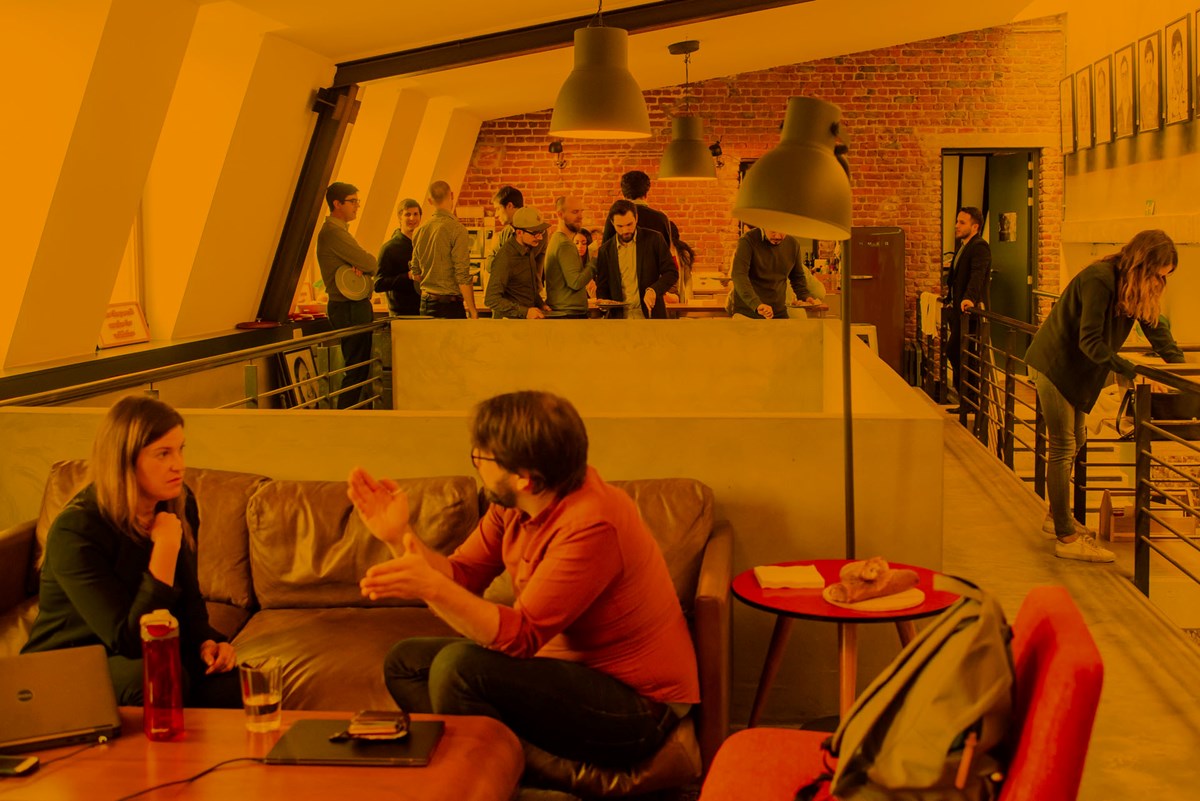
Where self-service matters most in the coworking member journey
Human connection is so important in coworking, however some moments benefit from autonomy over interaction. Especially those requiring speed or momentum. Signups, onboarding, bookings, events and payments are all prime examples.
Signups
When someone decides to join, clarity matters just as much as conversation. Plans, pricing and next steps should be obvious. The path forward should feel simple and certain. If someone is ready to commit, the system should facilitate swift membership.
Onboarding
New members need immediate access, clear orientation and a sense of what to do first, especially when it comes to bookings and payments. Removing guesswork in the first few hours reduces anxiety and builds early confidence.
Bookings
Speed and visibility are key. Availability should be transparent and confirmation instant. Nobody wants to wait to know whether a room is secured or not.
Events
A clear description, simple sign-up, and immediate confirmation are expected. In other words, registration should be effortless.
Payments
Transparent invoices, visible payment history and instant receipts reduce uncertainty and prevent unnecessary money stress.
When each of these actions are self-directed the experience feels smooth without being impersonal – allowing members to move forward without waiting for permission.

What changes when the system, not staff, enforces rules
When rules are enforced by human beings, responses can vary. One person might allow a late cancellation, while another enforces the rules every time. Another may make an exception for a last-minute guest and another might not.
Although everyone has the best intentions, inconsistency inevitably creeps in.
That’s where self-service systems come in. When the rules are enforced by machines, they repeat – and that’s the shift we’re referring to.
System-led moments eliminate awkward conversations and minimise back and forth. Boundaries are set without people having to enforce them in the first instance. The policy is simply there in front of everyone, and it’s applied evenly.
This is where your Members Portal comes into play. Far from just a feature of your coworking experience, it’s an intrinsic part of it. Booking limits are automatically enforced, cancellation windows close at the right time and registrations cap at the allowed number.
Invoices are generated on time and payment reminders are sent consistently. Access permissions automatically activate and deactivate based on membership status.
Members don’t have to interpret policies or hope they’ve remembered correctly because the system just handles it – quietly and consistently.
Importantly, self-service enables your team to focus on the moments that require human judgment and care: not enforcing basic rules and processes, but welcoming new members, resolving conflicts, and supporting a growing community.
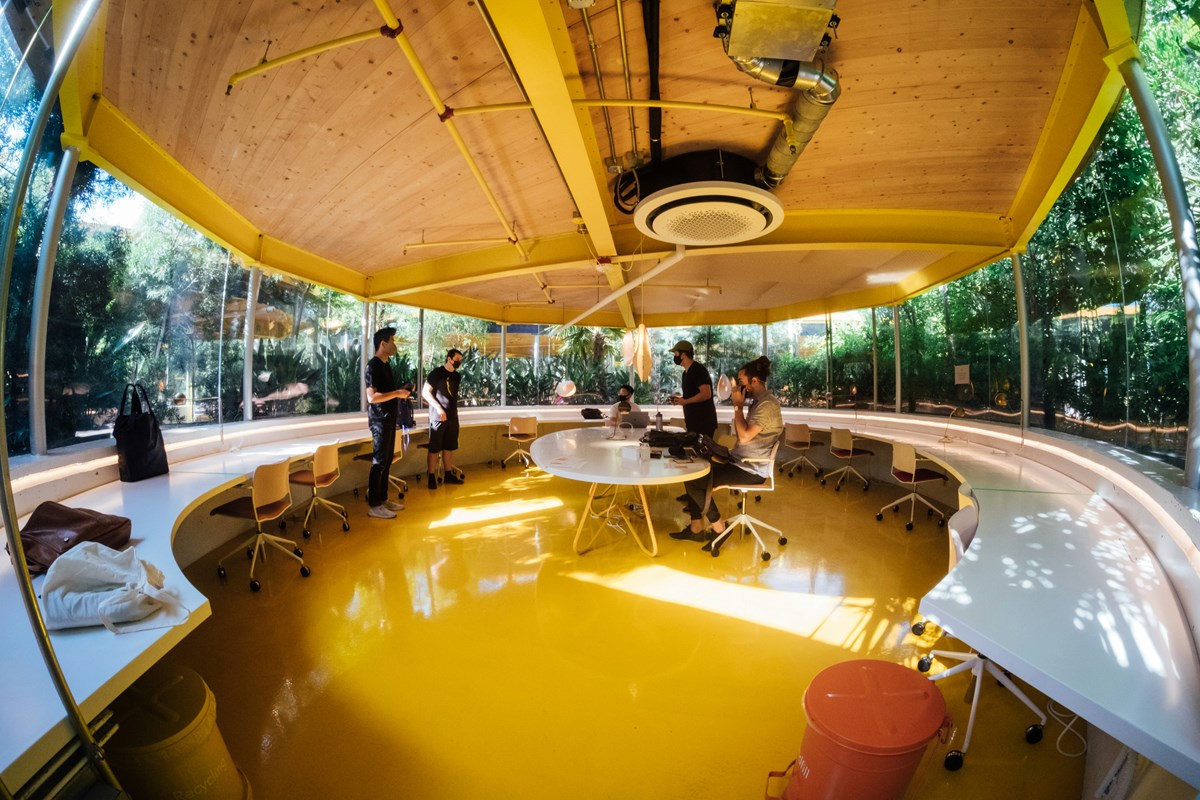
Balance human support with operational consistency
Human connection is an important part of coworking, but it shouldn’t be carrying the day-to-day experience on its own.
Experiences scale more effectively when members can complete simple tasks independently and trust that the outcome will be consistent. Support from your team is still essential, but it’s most valuable in moments that genuinely require attention or care.
Self-service doesn’t remove the human element. It reduces friction and inconsistency, giving both members and staff a smoother, more reliable experience.

Want to know more about
how Nexudus could help your business?
We’re here to answer any questions you have.
Latest articles
-

- Coworking
- Coworking Resources
- Hybrid work
How to Launch Fractional Offices in Your Coworking Space
Kate Tattersfield on March 25, 2026 -
- Coworking
- Coworking Resources
- Hybrid work
What are Fractional Offices? A Guide to Selling Hybrid Office Space
Emily Nguyen on March 23, 2026 -
- Coworking
- Coworking Resources
AI in Coworking: How AI is Transforming Operations and Member Experiences
Emily Nguyen on March 20, 2026