


- Coworking
- Coworking Resources
How to Manage a Coworking Space (And Scale)
Coworking spaces may appear well-designed and effortlessly functional, but every successful operator knows that behind the scenes, running a space requires tight coordination across bookings, billing, staffing, community, and revenue.
Whether you’re launching your first location or have plans to scale an established brand, effective coworking management comes down to getting the fundamentals right with systems designed to support growth.
What does managing a coworking space involve?
At a practical level, operators need control across:
- Revenue and pricing strategy
- Occupancy and space planning
- Lead management and tours
- Billing and cash flow
- Community retention
- Reporting and KPIs
When you nail these areas and develop processes that support them, you’ll find scaling becomes less chaotic. In this guide, we’ll walk through how to run a coworking space effectively and where integrated systems simplify admin and behind-the-scenes complexity that comes alongside growth.
Revenue, pricing and financial control
Money makes the mission possible.
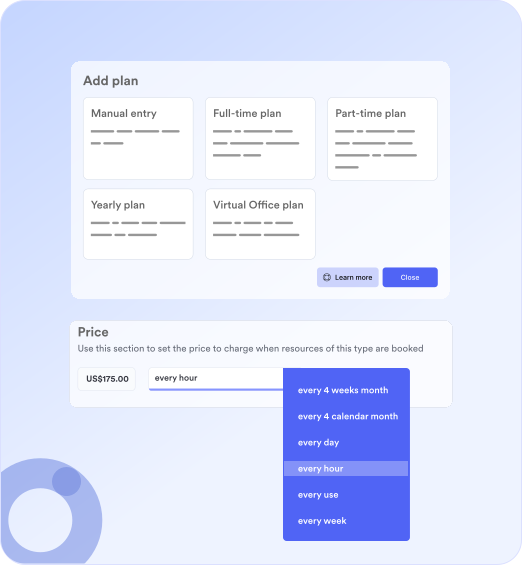
As with most things in life, longevity is about balance; in coworking, it means providing flexible membership options while staying profitable and retaining financial control. Operators are catering to an increasingly diverse set of needs, but without the right systems, hyper-flexibility can lead to admin burnout.
Effective financial management in a coworking space isn’t just about sending invoices. It means having clear pricing structures, predictable cash flow, visibility across locations, and automated processes that reduce manual follow-up. The more flexible your memberships become, the more important it is to centralise billing, payments, and reporting.
Automated billing, invoicing and payment collection
Manually managing invoices, deposits, subscriptions, and late payments might work when you have 20 or 30 members. But once you pass 50, or start adding different membership types, billing quickly starts to crack.
When billing is automated and standardised, you reduce time spent chasing payments and minimise errors, and this means your team can turn to members rather than spreadsheets.
Flexible credit-based pricing and prepaid access
As you know, some members require ad hoc meeting rooms and hot desks, while others appreciate set monthly plans. Your pricing structure needs to reflect that without becoming messy in the background. Systems like Nexudus support day passes, prepaid bookings, credits, and custom membership packages, helping you control both revenue and capacity while maintaining flexibility.
Integrated accounting and seamless reconciliation
Your invoices, payments and financial documentation need to synchronise across platforms. Integrations with major accounting platforms like Xero, QuickBooks and Zoho Books, eliminate data entry and improve reconciliation accuracy. You get more accurate reporting each month.
Unified financial oversight and reporting
Experiences operators don’t just track revenue, they track patterns. A centralise finance dashboard lets you monitor various revenue streams to see which are flowing and which are stagnating. You can also oversee late invoices, membership changes and – if you’re a multi-site operator – look at performance for all of your sites in one place.
This level of transparency is crucial when it comes to making decisions around pricing, expansion, and optimising revenue opportunities.
Here’s an example: From reactive to proactive
You’re a coworking operator managing five locations in one region. Your team spends hours each month consulting spreadsheets and chasing late payments. Because your financial insights are gleaned after month-end, it’s difficult to anticipate cash flow dips.
With a consolidated system, your location managers or finance team can log in and see the following:
- 10 overdue invoices across your locations: these members have already received an automated email reminder
- A private office in one of your locations will be vacant in 30 days, as per the contract expiration: your sales team can start outreach immediately
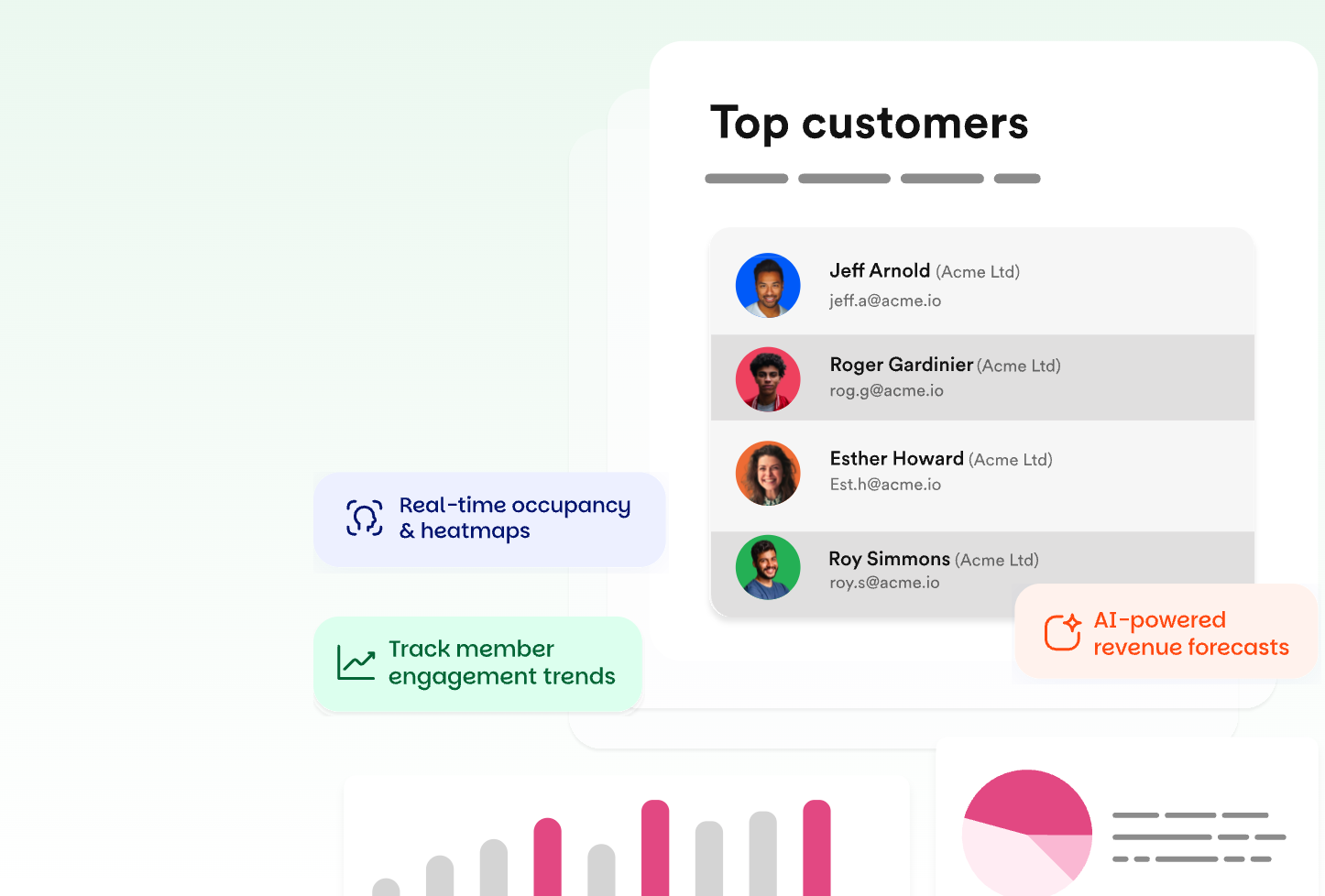
- Real-time revenue by membership type and location, so you can spot shifts before they become problems



Occupancy, leads and sales journeys
Empty desks don’t fix themselves. In an industry that operates on a flexible, on-demand basis, you need a system that can craft smart workflows and automate marketing in real-time. Tracking tour requests and leads manually and sending delayed responses to enquiries can result in lost opportunities.
Digital dynamism and visibility are crucial for streamlining and automating booking processes and tracking marketing ROI and occupancy trends to help you see how to thrive. You need a clear sales process from first touch to signed agreement.
Real-time space availability and online sales
Say goodbye to long email exchanges with members. People expect to see availability instantly and if booking involves lone email exchanges, you’ll always lose business.
Integrated booking systems display resource availability in real-time, both on your own website and across coworking aggregator platforms. That means a prospective member browsing your offices, hot desks, meeting rooms or event spaces can book there and then, instead of having to manually enquire and wait for a response.
Lead management and follow-up
As soon as a prospect makes an enquiry, you should be following up, triggering next steps and sharing proposals. Built-in CRM tools are your answer to predictable pipeline.
Tracking leads becomes easy: standardisation helps ensure nobody slips through the net, while having the same lead management process across your locations makes it easier for those managing resources and members across multiple sites.
Suddenly you can:
- Track where leads come from
- Standardise follow-up processes
- Assign responsibility across teams
- Measure conversion rates
Automated nurture workflows
When a prospect enters your CRM pipeline, you can use tagging to segment them according to different variables, such as their business type, location or office type (e.g. hot desk or private office). CRM systems can automate your lead nurturing email campaigns to keep prospects engaged and shorten the sales cycle.
Example in action
A prospect visits your website and requests a tour of your London coworking space because they’re interested in a hot-desking membership. Nexudus tags the prospect as a hot desk – London, and they are automatically routed to the right pipeline in the CRM. A lead nurture email campaign workflow is enacted without manual input.
- They receive a welcome email within seconds of making the enquiry
- In a few hours, they receive photos of the space, a member testimonial, and a link to book a day and time for their tour
- If they don’t book a tour within 24 hours, they receive an automated reminder
Following the tour, they enter another pipeline and receive pricing plans, an offer, and a case study about how one business started with a hot desk and then scaled to a 10-person office. Of course, this is just one example. You’re in control of your workflows and pipelines and ultimately decide who receives which content, and when.
Marketing intelligence and conversion analytics
It’s said that you can’t improve what you don’t measure. Analytics are powerful, and can link with your CRM.
At a glance, you can see which channels are driving most conversions and start to identify patterns in prospect behaviour. This makes budgeting easier, and enables you to focus more intently (and allocate more budget to) high-performing channels and reassess underperforming ones.
This gives operators clearer answers to questions like:
- Which membership types convert fastest?
- Which locations are underperforming?
- Where should we focus next quarter?

Turning members into advocates
Cultivating a sense of belonging is key when it comes to reducing member churn. It’s what makes an office environment a community – your coworking space’s biggest asset – rather than a transactional space. But while the community aspect of running a coworking space can often feel effortless, it doesn’t happen purely organically.
As your community grows, community building and engagement can become more complex and time-consuming. There are email campaigns to juggle, as well as welcoming new members, promoting events and gathering feedback. Fostering belonging requires intention and technology, the right systems that can automate and scale in real-time, while retaining an authentic communication style.
Let’s take a look at them.
Real-time communication and digital community spaces
Most members want to feel connected to your community wherever they are, and this can be facilitated through modern coworking software and apps. Members can message, share work opportunities, join discussion threads and offer peer support, transforming your coworking space into a digital community, as well as a physical one.
Seamless event management and billing
Events are the lifeblood of your coworking community. From ‘brunch Mondays’ to social Fridays, they’re what make travelling to the office a worthwhile endeavour.
With Nexudus’ Events module, it’s easy to create, sell tickets and manage events, while tracking attendance and payments. Members can RSVP from the Member App and receive reminders in the run-up.. That means you can run engaging events to your heart’s content without the burden of admin.
Targeted announcements and email newsletters
Newsletters are a great way to keep members informed and entertained. Crafting, delivering and tracking email newsletters and announcements is easy with Nexudus’ Announcements and Newsletter tools. You can share key updates about your space and segment data to ensure the right messages reach the right people.
Here’s an example
You run a coworking brand with three locations and are introducing different wellness initiatives across the sites. In Nexudus, you create a single newsletter that populates with content unique to the members in each location.
Location A receives information about mediation sessions, Location B receives information about yoga classes, and Location C receives information about a lunchtime running club. Every location receives the same Member in the Spotlight feature, as well as useful content relevant to running a small business.
The email is scheduled to be sent on Tuesday morning, and engagement is tracked in real-time. Members can RSVP to the wellness sessions via email or in their Member App. As an operator, you can track which location and event type has the most signups and adjust your approach accordingly.
Member feedback and support tracking
Welcoming and responding to feedback shows that you care and are willing to listen and evolve. It’s also a key ingredient to member retention. Nexudus’ Feedback and Help Desk tools allow members to submit questions, suggestions and requests, while operators see the query pipeline to ensure issues are resolved speedily.

Did you know that operators using Nexudus report up to 30% higher member retention?
Managing space and resources
Success hinges not just on the quality of your amenities, but on how well they’re managed. Every square foot should and can bring value.
Booking conflicts can irritate your members and your team, while empty resources (unbooked meeting rooms on a Friday or those hot desks that nobody seems to want to sit at) result in lost revenue opportunities. Availability, demand, flexibility and control – it’s a delicate balance!
Real-time bookings with integrated payment logic
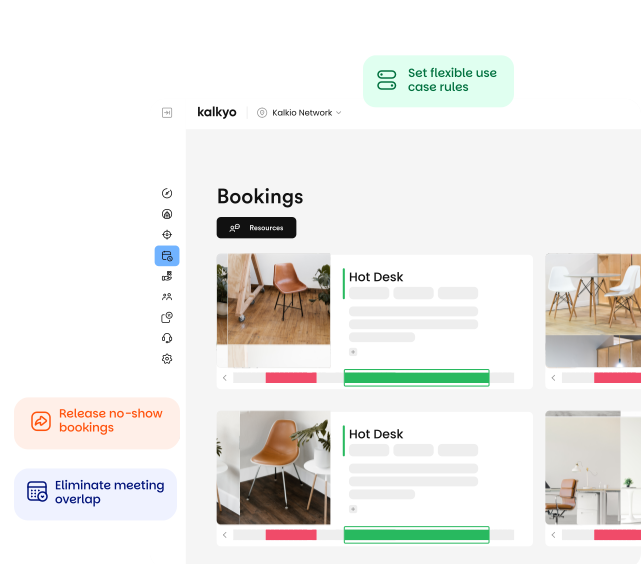
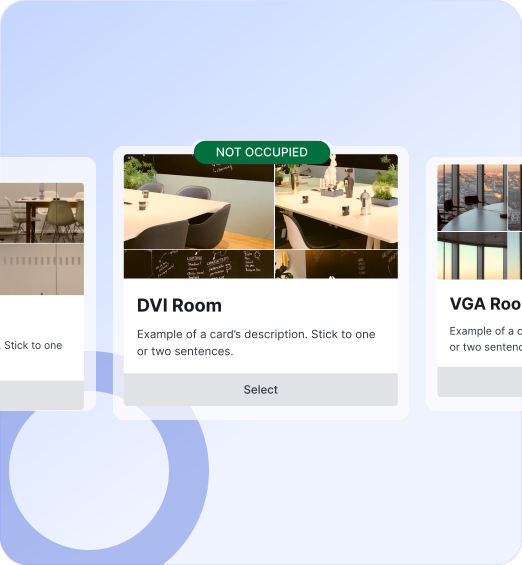
Members can book meeting rooms and reserve desks in real time, and in-built payment logic (credit-based or paid) enables you to monetise your resources effectively while offering flexibility to members. Double bookings become a thing of the past, and your team’s time is freed up to focus on more creative, human-input tasks. Integrated platforms like Nexudus bring bookings and billing together so availability and revenue stay aligned.
Dynamic pricing for peak hours
Not all hours are equal. Peak meeting room slots and popular days can carry higher value, while quieter periods may need incentives to drive usage. Dynamic pricing allows operators to respond to demand rather than relying on static rates.
When pricing reflects demand patterns, occupancy becomes more predictable and margins improve without increasing square footage. Systems such as Nexudus support flexible pricing rules tied to time, usage, and membership type.
Automated access control
Access should reflect bookings automatically. When entry permissions are tied to reservations and membership types, you reduce IRL intervention and avoid awkward access issues. Automated access control also creates a digital record of who is in your space and when, which is valuable for operations and compliance.
Nexudus customer FuseBox told us how automating check‑in and resource control freed up their lean team to focus on member support rather than door cards and manual scheduling.
Inventory management across locations
You can track your inventory items using Nexudus, too. Flex spaces often share equipment across sites, from AV kits to podcast recording gear. You can see where your items are on any given day, and which are available. Keeping track in this way can prevent items from going missing and ensure members have everything they need to run a thriving business.
Dashboards and utilisation analytics
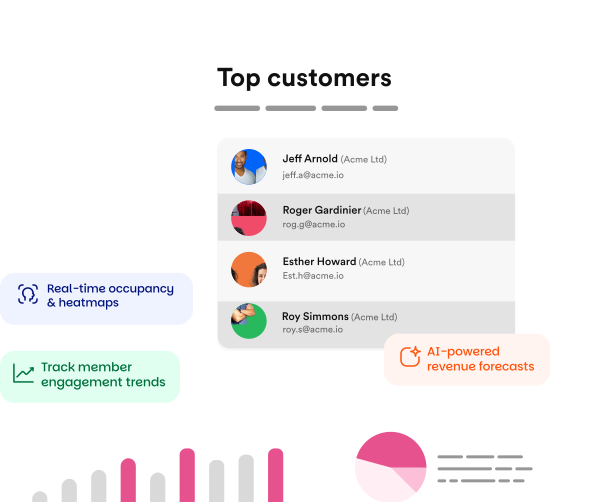
You can use analytics dashboards to understand how your workspace is performing logistically and financially. Identify which locations, desks and resources are performing well or underperforming, and adjust your floor plan and pricing accordingly. It’s about making data-informed decisions and maximising what you have.
At Impact Hub King’s Cross, reporting functions give the operations team clarity on how space and resources are used, ultimately driving more strategic decisions about resource allocation and planning.
Automating the everyday
If it happens more than once, it can probably be automated.
Coworking management used to involve carrying out a lot of repetitive tasks, from processing payments and sending email reminders to tracking member deliveries. Opportunities for errors abounded, and to put it simply, the whole thing was a time sink.
But automation and workflow tools remove the manual aspect, ensuring a consistent and accurate service for all members across all your locations. Automation means your team can focus on what matters most – building community and driving growth.
Here’s what you can achieve:
Note: workflows can be replicated across sites, ensuring consistent processes and service standards no matter how fast you scale.
- Automated renewals, reminders and follow-ups that improve member engagement and reduce late payments.
- Automated task triggers for operational efficiency, including new sign-ups and late payments, ensuring nothing goes unchecked.
- Delivery management with NexDelivery, which records incoming packages or shared deliveries and keeps members informed of their arrival.
- In-person payments made easy with NexKiosk, allowing members to pay on-site seamlessly (reducing queues and admin load).
- APIs and Zapier for custom automations connecting to HR, Slack, or BI tools.
Here’s an example
A growing coworking operator with a dozen locations transitioned to automated reminders and workflows, reducing manual follow-ups by 80%. Invoices are always processed on time, and members receive automatic reminders, which drives down late payments.
The operator’s employees are also happier because they can now spend more time on high-value interactions, partnerships and events planning.

Operational legal, compliance, and security
Every coworking operator understands the importance of compliance and security. Legal requirements for data privacy and audits are continuously evolving, but manual management can be risky.
Nexudus can automate, record and store legal, compliance and security responsibilities, enabling you to stay secure, compliant and confident.
You can store all your digital policies and membership agreements in one place, with a time stamp added to signatures. Secured safely (tick). Easily exportable (tick). After all, having a clear paper trail is important in case any disputes or disruptions occur.
Data protection is also crucial, which is why Nexudus includes GDPR-informed consent fields and settings that allow you to control how and for how long information is stored. So, if required, you can demonstrate your proactiveness around data privacy.
As a coworking operator, you need to be super hot on GDPR and data privacy in general. You’re dealing with large amounts of member and visitor data day in, day out. Failing to comply with data privacy regulations can result in severe financial penalties.
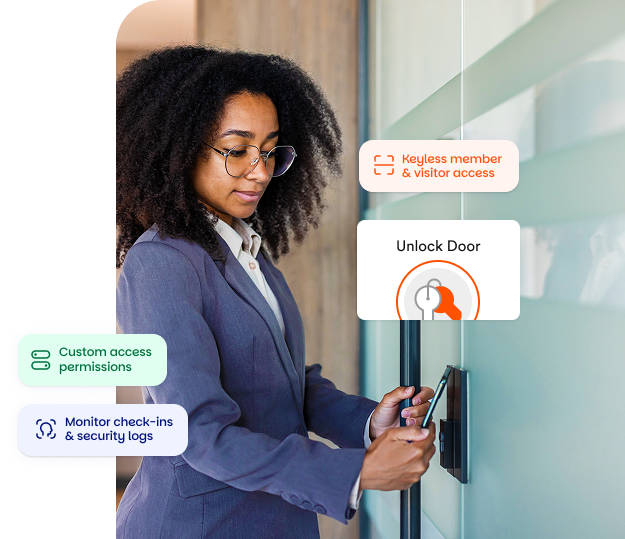
Security in the real world is just as important, of course. With Nexudus, you can easily track member and visitor access logs, giving you a clear picture of who’s in your space and when. Again, you can export these logs if you need to carry out audits for reviews, without having to dedicate extra working hours to the cause.
You can also keep your insurance, fire safety, accessibility and other regulatory documents in one place: your Nexudus CRM.

Measuring member experience and retention
Without clear data insights, it can be hard for operators, especially those running multiple sites, to understand what’s driving member satisfaction and churn across locations. Patterns that can impact member churn remain buried under fragmented and inconsistent data sets.
Nexudus is all about unifying insights into how your space is used and where you need to focus your attention to become more resilient.
Real-time reporting on KPIs
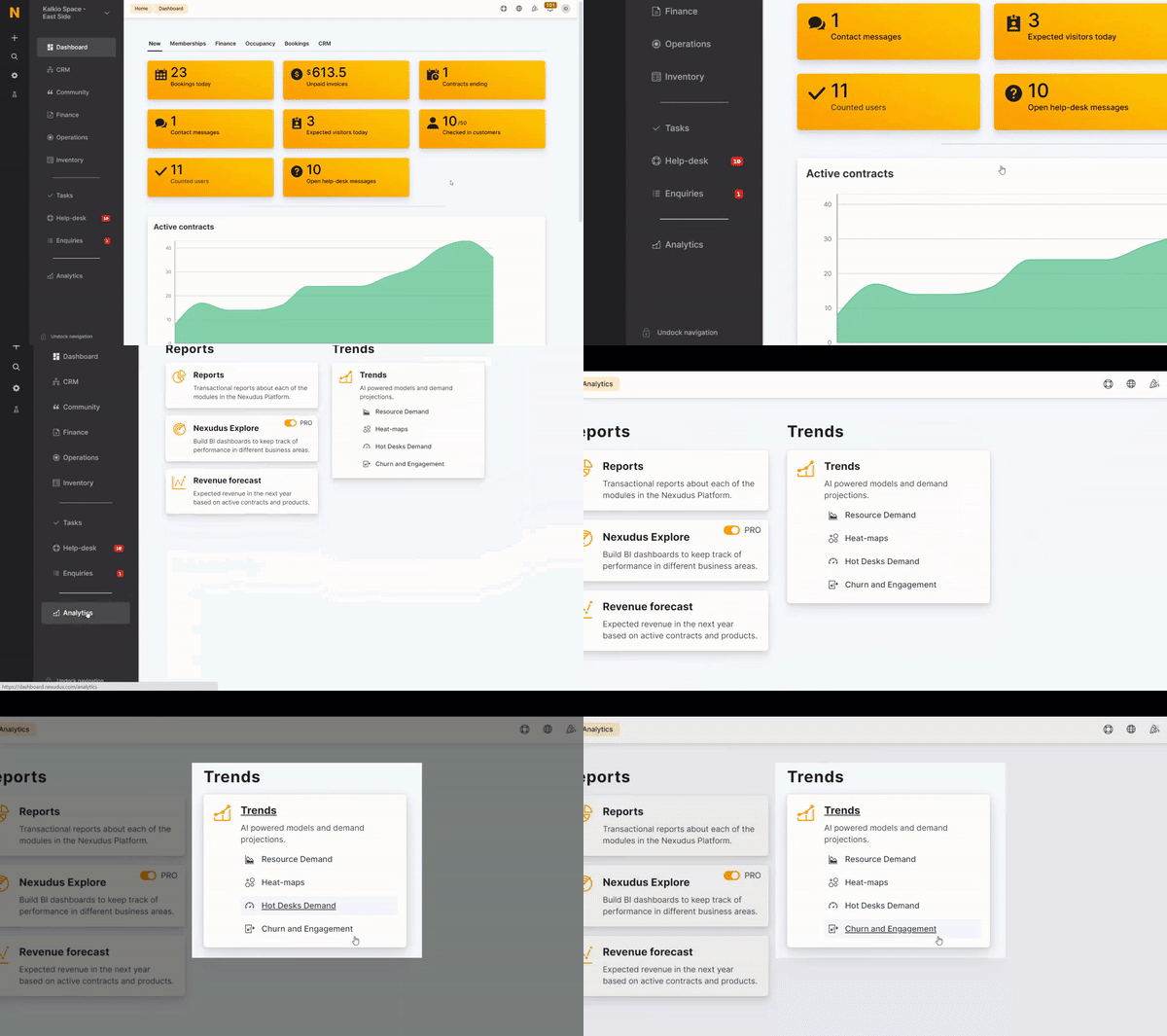
Our reporting dashboards are built to provide a clear picture of your operational health (and member engagement). You can investigate member churn and member engagement across all locations in one all-purpose platform. Identifying success and areas for improvement, and benchmarking your performance across locations, is easy.
Early detection of at-risk members
Intervene at the earliest opportunity, and a member is less likely to leave.
With Nexudus, we make it easy to spot the early signs of a potential churn, whether it’s reduced bookings or unpaid invoices. These insights enable you to intervene and re-engage individuals before it’s too late, making for a long-term, more connected member body.
Export KPIs to business intelligence tools
Inbuilt integrations let your data flow from Nexudus into your other business intelligence tools, and vice versa. So, your finance, marketing and operational teams can retain full visibility without having to transfer data from one source to another.
Unified view of access, booking, and billing data
One source of truth. That’s what Nexudus provides with access logs, booking activity and billing records. So instead of switching between systems, your dashboard tells the whole story. (In a visual, easy-to-digest way – without cutting corners).

Your central command centre
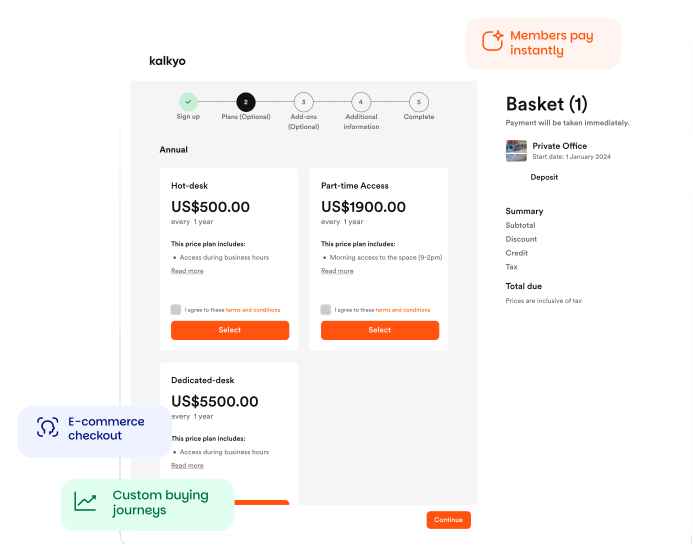
Most operators start with half a dozen tools. Spreadsheets for bookings, Mailchimp for emails, Stripe for payments, Eventbrite for tickets, a CRM for leads and an access control dashbaord that doesn’t talk to anything else.
It works at first, but then membership grows, locations multiply and reporting becomes hard.
Managing a coworking space at scale requires coordination across finance, occupancy, community and operations. When these systems operate in isolation, complexity is certain to increase. But when they’re connected, scaling becomes easier and more predictable.
Integrated coworking management platforms centralise:
- Memberships and billing
- Desk and room bookings
- Lead tracking and CRM
- Access control
- Reporting across locations
Platforms like Nexudus bring these functions into a single operational layer, giving operators clearer visibility into performance. After all, the goal shouldn’t be more software, but fewer gaps. Integrated systems are here to simplify the operational side of coworking.
If you’re evaluating tools to manage your coworking space more effectively, platforms like Nexudus are designed specifically for operators handling growing complexity.

Want to know more about
how Nexudus could help your business?
We’re here to answer any questions you have.
Latest articles
-

- Coworking
- Coworking Resources
- Hybrid work
How to Launch Fractional Offices in Your Coworking Space
Kate Tattersfield on March 25, 2026 -
- Coworking
- Coworking Resources
- Hybrid work
What are Fractional Offices? A Guide to Selling Hybrid Office Space
Emily Nguyen on March 23, 2026 -

- Coworking
- Coworking Resources
AI in Coworking: How AI is Transforming Operations and Member Experiences
Emily Nguyen on March 20, 2026